

Sexually Transmitted Infections: Which Can Be Cured?
Which Sexually Transmitted Infections (STIs) can be cured? Learn about the symptoms and effective prevention methods in detail.


On this page
Many people mistakenly believe that all sexually transmitted infections (STIs) can be completely cured. In reality, some STIs can be cured 100%, while those caused by viruses remain in the body for life. This article helps you distinguish clearly, understand the symptoms, and know how to effectively prevent them.
What are sexually transmitted infections (STIs)?
Sexually transmitted infections (STIs) are infections that spread through sexual contact via the vagina, mouth, or anus. The causative agents can be bacteria, viruses, or parasites, and they can be transmitted between people of different or same genders.
Pathogens enter the body through bodily fluids such as semen, vaginal secretions, or blood. In addition, some infections can be transmitted from mother to child during pregnancy or childbirth.

Key factor: Infections caused by bacteria or parasites can usually be completely cured with antibiotics. Infections caused by viruses are typically not completely curable, but can be well controlled with modern medications.
Overview table of common STIs
| Disease | Cause | Can it be cured? | Treatment method |
|---|---|---|---|
| Gonorrhea | Bacteria | ✅ Yes | Antibiotics (Ceftriaxone) |
| Chlamydia | Bacteria | ✅ Yes | Azithromycin / Doxycycline |
| Syphilis | Bacteria | ✅ Yes | Penicillin injection |
| Trichomoniasis | Parasite | ✅ Yes | Metronidazole / Tinidazole |
| Chancroid | Bacteria | ✅ Yes | Azithromycin / Ceftriaxone |
| HIV | Virus | ❌ No | Antiretroviral therapy (ART) (control) |
| Genital Herpes | Virus (HSV) | ❌ No | Acyclovir / Valacyclovir (control) |
| HPV / Genital Warts | Virus (HPV) | ❌ No | Laser, electrocautery, topical medication + Vaccine |
| Hepatitis B | Virus (HBV) | ❌ No | Antiviral drugs + Vaccine |
Group of diseases that CAN be completely cured
These diseases are mainly caused by bacteria or parasites. If detected early and treated properly, patients can be completely cured without leaving any complications.
🦠 1. Gonorrhea (Curable)
Caused by the bacterium Neisseria gonorrhoeae. It is one of the most common STIs globally.
Typical symptoms:
- Burning or stinging during urination
- Pus discharge from the genital area
- Lower abdominal pain (in females)
Treatment: Cephalosporin antibiotics (Ceftriaxone) combined with oral medication as prescribed by a doctor. Do not self-medicate.
If left untreated, the infection can spread to the pelvic area and cause infertility.
🦠 2. Chlamydia (Curable)
Caused by the bacterium Chlamydia trachomatis. Common in teenagers and working-age individuals. It is the most common bacterial STI in many countries.
Typical symptoms:
- Burning during urination or unusual discharge
- Pus in the genital area
- Many cases show no symptoms at all – making it easy to spread unknowingly
Treatment: Azithromycin (single dose) or Doxycycline (7-day course).
If left untreated, it can cause blocked fallopian tubes and infertility. Regular testing is the only way to detect it when there are no symptoms.
🦠 3. Syphilis (Curable)
Caused by the bacterium Treponema pallidum. It can be transmitted through sexual contact or from mother to fetus.
Symptoms in 3 stages:
- Stage 1: A single painless sore on the genital area
- Stage 2: Full-body rash, palms and soles
- Stage 3: Severe damage to the nervous system and cardiovascular system
Treatment: Penicillin injection – highly effective if detected early.
If left untreated, the disease can cause organ and brain damage after many years.
🦠 4. Trichomoniasis (Curable)
Caused by the parasite Trichomonas vaginalis.
Typical symptoms:
- Itching, foul-smelling unusual discharge
- Burning during urination
- Vaginal inflammation
Treatment: Metronidazole or Tinidazole. Both partners must be treated simultaneously to avoid reinfection.
Treating only one person is not enough – both partners must take medication at the same time to prevent reinfection.
🦠 5. Chancroid (Curable)
Caused by the bacterium Haemophilus ducreyi. Less common but spreads quickly through direct contact.
Typical symptoms:
- Painful sores on the genital area
- Swollen inguinal lymph nodes
Treatment: A single dose of Azithromycin or an injection of Ceftriaxone.
Group of diseases that CANNOT be completely cured

Viruses can hide within the body's cells and cannot be completely eliminated. However, with modern medications, patients can still live healthily and maintain a good quality of life.
🔴 1. HIV (Human Immunodeficiency Virus) – Controllable
A virus that causes immune system deficiency. It spreads through blood, semen, vaginal secretions, and breast milk.
Symptoms:
- Early stage: usually no clear symptoms
- Late stage: prolonged fever, weight loss, swollen lymph nodes, opportunistic infections
Treatment: Antiretroviral therapy (ART). When the viral load is undetectable (U=U), the patient cannot transmit the virus through sexual contact.
HIV is not the end of the road. People with HIV who receive proper treatment can live nearly as long as uninfected individuals.
🔴 2. Genital Herpes (HSV) – Controllable
Caused by the Herpes Simplex virus (HSV-1 or HSV-2). The virus hides in the nervous system and can recur.
Symptoms:
- Small blisters, pain in the genital area
- Itching or burning sensation
- Recurrent outbreaks when the immune system is weakened, stressed, or ill
Treatment: Acyclovir or Valacyclovir helps reduce the frequency of outbreaks and the level of transmission.
Condoms reduce the risk but do not fully protect because the virus can spread through surrounding skin.
🔴 3. Genital Warts / Cervical Cancer (HPV) – Preventable with vaccine
Caused by the Human Papillomavirus (HPV). It is the most common viral STI. There are over 100 types of HPV, some of which increase the risk of cervical cancer significantly.
Symptoms:
- Small warts (genital warts) on the genital area
- Usually painless but easily spread
- High-risk types (HPV 16, 18) significantly increase the risk of cervical cancer
Treatment of lesions: Electrocautery, laser, or topical medication (Imiquimod). However, the virus remains in the body after the lesions are removed.
Best prevention: HPV vaccine (Gardasil 9) before the first sexual encounter. Protection effectiveness is over 90%+.
🔴 4. Hepatitis B (HBV) – Preventable with vaccine
Spread through blood, semen, and sexual contact. Chronic hepatitis B is the leading cause of cirrhosis and liver cancer.
Symptoms:
- Jaundice (yellowing of the skin and eyes)
- Prolonged fatigue
- Pain in the upper right abdomen
- Many cases show no symptoms for years
Treatment: Antiviral drugs (Tenofovir, Entecavir) help suppress the virus and protect the liver.
Best prevention: Hepatitis B vaccine is effective in over 95% of cases and is recommended for all age groups.
Effective ways to prevent STIs
- Use condoms correctlyReduces infection risk by over 90% when used properly each time during sexual activity.
- Regular testingAt least every 6 months, especially when changing partners.
- VaccinationHPV and hepatitis B vaccines – the most effective long-term protection.
- Avoid sexual activity when symptoms are presentAvoid sexual activity when there are sores, blisters, or unusual discharge.
- Honest communicationShare your health status with your partner to protect each other.
- Do not self-medicateSelf-treatment can lead to antibiotic resistance and hidden spread.
What to do if you suspect an infection?
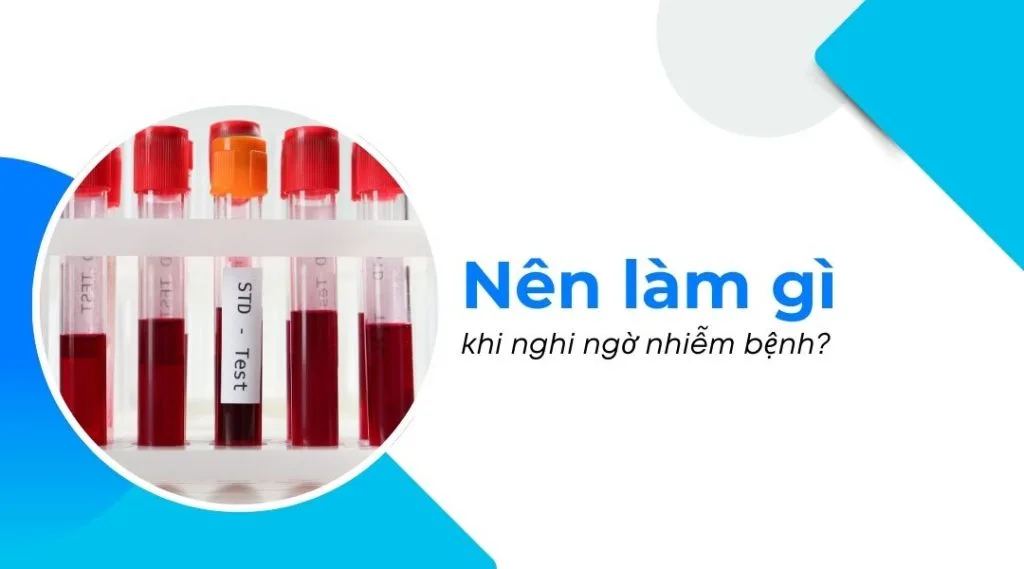
- Visit a medical facility or specialist clinicOnly a doctor can accurately diagnose through testing. Do not self-diagnose based on symptoms.
- Do not self-purchase antibioticsUsing the wrong antibiotics can cause resistance, making the infection harder to treat.
- Avoid sexual activityUntil the infection is completely cured or confirmed safe by a doctor.
- Inform your partnerTo test and treat together, preventing back-and-forth transmission.
🔍 Why viral infections cannot be cured?
Viruses can hide within the body's cells in a dormant state. When the immune system weakens, the virus reactivates (as with HSV, HPV). In contrast, bacteria live outside cells, so antibiotics can completely eliminate them. This is the reason for the difference between the two groups of diseases.
Conclusion
Sexually transmitted infections are not something to be ashamed of, but a health issue that needs to be taken seriously:
- Bacterial/parasitic diseases (gonorrhea, syphilis, chlamydia, trichomoniasis, chancroid) → Can be completely cured if treated early
- Viral diseases (HIV, Herpes, HPV, Hepatitis B) → Cannot be completely eliminated, but can be well controlled with medication and vaccines
The best solution: Proper prevention + Regular testing + Timely treatment.
Good sexual health is not just a physical issue, but also about confidence and safety in all relationships.
Further reading
This article provides general information. For decisions about diagnosis, medicines or treatment, consult a qualified healthcare professional. Service availability and costs can change; confirm with the provider before booking. Our editorial approach