

9 Common STIs: Symptoms and Prevention
Sexually transmitted infections often progress silently. Learn about 9 common STIs, their symptoms, and effective prevention methods.

On this page
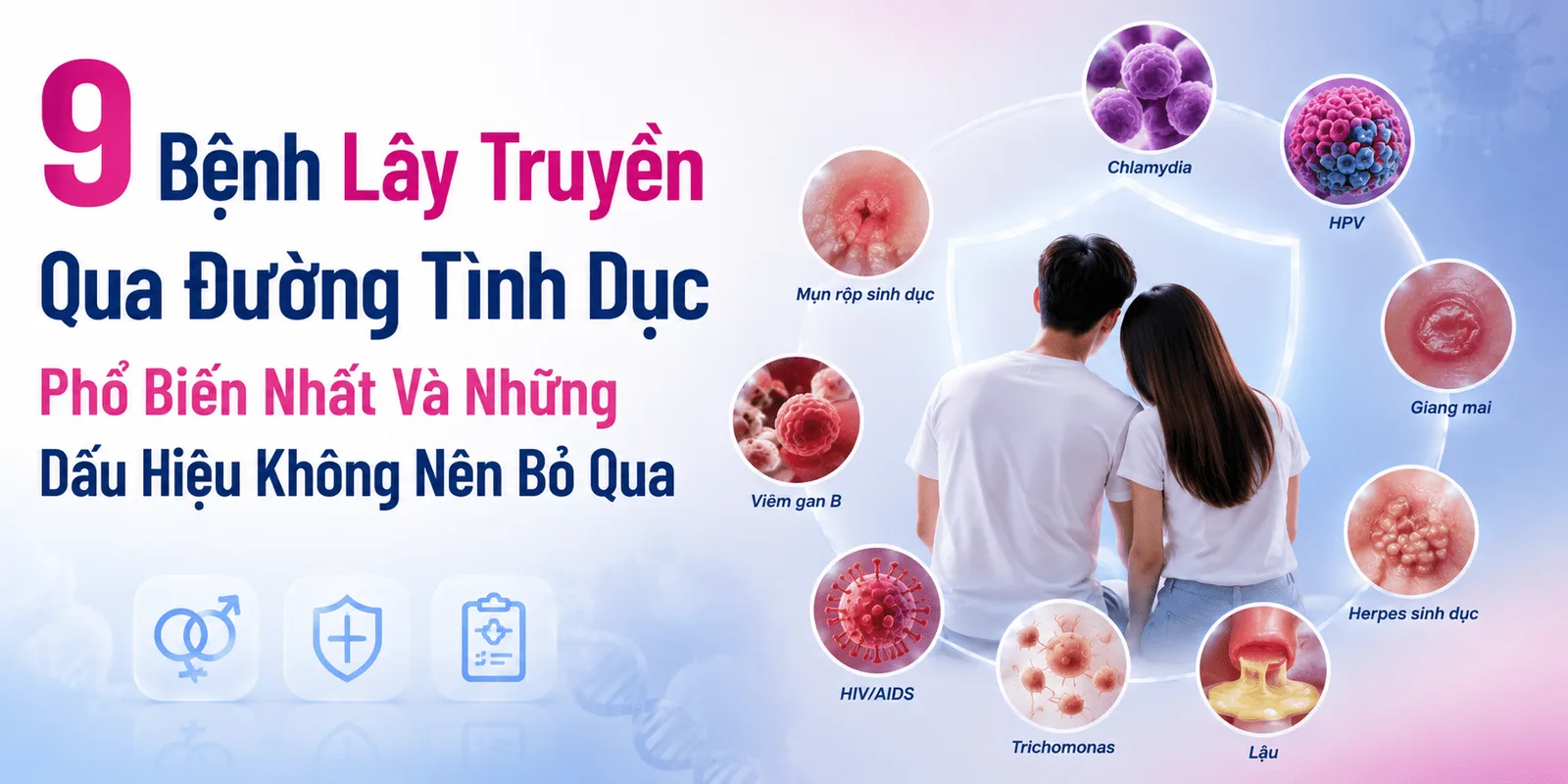
Sexually transmitted infections (STIs) are a group of diseases that can be transmitted through vaginal, anal, or oral sex. Many of these infections progress silently, without clear symptoms for a long time, but they can still be transmitted to sexual partners and cause serious complications if not detected early. Understanding common sexually transmitted infections is an important step for everyone to actively protect their sexual health, reduce the risk of infection, and receive timely treatment when needed.
1. Gonorrhea
Gonorrhea is caused by the bacterium Neisseria gonorrhoeae and is one of the most common STIs today.
Common symptoms
- Burning or stinging sensation while urinating
- Abnormal discharge from the genital area
- Pain or discomfort during urination
- Testicular pain in males
- Increased vaginal discharge in females
In many cases, especially in females, the infection may not show clear symptoms.

2. Syphilis
Syphilis is caused by the bacterium Treponema pallidum.
Symptoms to watch for
- Non-painful sores
- Rash on the body
- Swollen lymph nodes
- Bald patches
- Prolonged fatigue
If left untreated, syphilis can affect the cardiovascular system, nervous system, and other important organs.
3. Sexually transmitted vaginal infections
Some cases of vaginal infections are caused by bacteria, fungi, or parasites that can be transmitted through sexual activity.
Symptoms
- Abnormal discharge
- Unpleasant odor
- Itching in the genital area
- Pain during intercourse
- Irritation or burning in the vagina
Identifying the correct cause is an important factor in effective treatment.
4. HIV
HIV is a virus that attacks the immune system and can be transmitted through sexual contact, blood, or from mother to child.
Early symptoms
- Fever
- Sore throat
- Rash
- Fatigue
- Swollen lymph nodes
However, many people infected with HIV do not show symptoms for many years. Testing is the only way to accurately determine HIV status.
5. Genital Herpes
Genital herpes is caused by the HSV virus.
Common symptoms
- Small blisters
- Painful sores
- Itching or burning in the genital area
- Swollen lymph nodes
- Mild fever
The virus can remain in the body for a long time and may recur multiple times.
6. Cervical Inflammation Caused by Chlamydia
Chlamydia is one of the most common causes of cervical inflammation in women.
Symptoms
- Abnormal increased discharge
- Bleeding after intercourse
- Pelvic pain
- Burning sensation while urinating
Many cases do not show clear symptoms but still pose a risk to reproductive health.
7. Genital Warts (HPV)
Genital warts are caused by the HPV virus and are one of the most common sexually transmitted infections.
Symptoms to look out for
- Appearance of genital warts
- Cluster-like bumps resembling cauliflower
- Presence on the genital area, anus, or mouth
Some strains of HPV also increase the risk of certain cancers.
8. Hepatitis B
Hepatitis B is not only transmitted through blood but can also be transmitted through sexual activity.
Possible symptoms
- Prolonged fatigue
- Lack of appetite
- Nausea
- Jaundice (yellowing of the skin)
- Yellowing of the eyes
- Dark urine
Many people infected with the virus do not show clear symptoms for a long time.
9. Chlamydia
Chlamydia is a common bacterial infection but is often overlooked due to its lack of clear symptoms.
Common symptoms
- Burning sensation while urinating
- Abnormal discharge
- Lower abdominal pain
- Pain during intercourse
- Unusual bleeding after intercourse
If not treated promptly, the infection can cause many complications to reproductive health.
Why Should You Get Regular STI Testing?
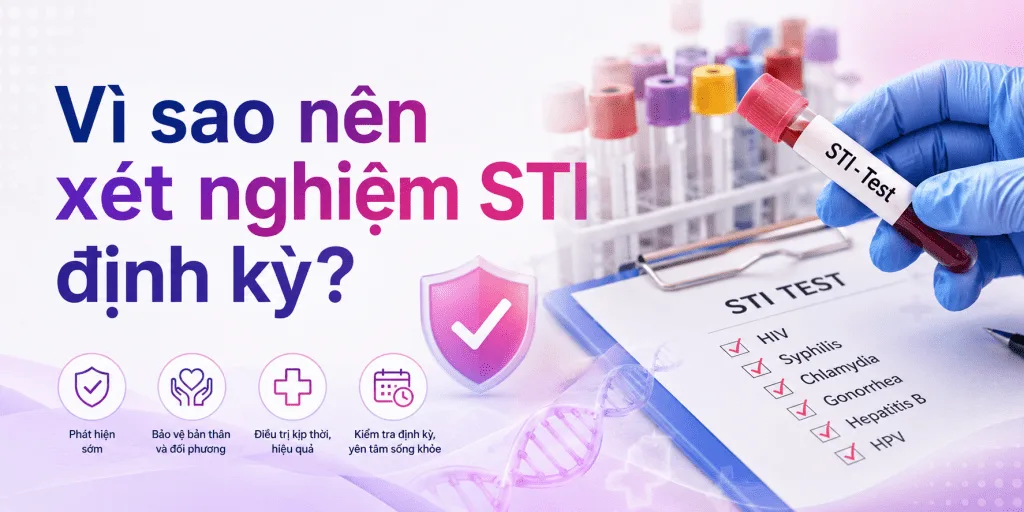
Many sexually transmitted infections do not show symptoms in the early stages.
Regular testing helps:
- Detect the infection early
- Receive timely treatment
- Reduce the risk of transmission to sexual partners
- Minimize long-term complications
- Protect overall sexual health
Especially, people with multiple partners or who engage in unprotected sex should regularly check their health.
How to Prevent Sexually Transmitted Infections
To reduce the risk of STIs, you should:
- Use condoms correctly
- Get regular health check-ups
- Get vaccinated against HPV and hepatitis B
- Avoid sharing needles or items that may have blood on them
- Proactively discuss your health status with your sexual partner
- Learn about sexual health from reliable sources
Take Control of Your Health with Love2Test.vn
Love2Test.vn provides useful information about HIV, STIs, PrEP, and sexual health. Users can learn about the topic, assess their risk online, and raise awareness about sexually transmitted infections to actively protect themselves and the community.
Conclusion
Sexually transmitted infections can affect anyone who is sexually active, and many cases do not show clear symptoms. Understanding warning signs, undergoing regular testing, and applying appropriate prevention measures are the most effective ways to reduce the risk of infection. Actively learning about sexually transmitted infections and taking care of your health through Love2Test.vn will help you build a safer and healthier sexual life.
Further reading
This article provides general information. For decisions about diagnosis, medicines or treatment, consult a qualified healthcare professional. Service availability and costs can change; confirm with the provider before booking. Our editorial approach