Health
HIV Stigma: Recognizing Prejudice and Supporting Change
HIV stigma affects the mental health, rights, and access to healthcare services of people living with HIV.
Updated

On this page
HIV stigma remains one of the biggest barriers to HIV/AIDS prevention and control today. Although medical science has made significant advances allowing people living with HIV to maintain good health and live long lives, many still face prejudice, isolation, and discrimination in daily life.
Understanding HIV stigma not only helps protect the rights of people living with HIV but also contributes to building a fairer, more humane community, creating conditions for more people to proactively access HIV testing, early treatment, and effective healthcare.
What is HIV Stigma?
HIV stigma refers to negative attitudes, behaviors, or thoughts toward people living with HIV or those perceived to be associated with HIV. Stigma can manifest in various forms, ranging from public insults to subtle discrimination within the family, workplace, or healthcare services. It is concerning that many discriminatory behaviors occur daily, yet not everyone recognizes them as a form of discrimination.
Causes of HIV Stigma
Lack of Knowledge About HIV
One of the most common causes is the lack of understanding about how HIV is transmitted.
Many people still believe that HIV can be transmitted through:
- Handshaking
- Hugging
- Sharing food
- Living together
- Sharing bathrooms
In reality, HIV is not transmitted through these common forms of contact.
Prolonged Social Stereotypes
Some people still associate HIV with negative stereotypes or personal moral judgments, leading to isolation and discrimination.
Fear and Anxiety
Excessive fear about HIV can sometimes cause negative reactions, even without scientific basis.
Common Forms of HIV Stigma
Stigma Within the Family
The family is the place where people living with HIV need the most support. However, many still face:
- Being isolated
- Not being allowed to share household items
- Being restricted from contact with family members
- Being blamed or held responsible
These actions can cause serious psychological harm and reduce the quality of life.
Stigma in the Workplace
In the work environment, people living with HIV may encounter:
- Difficulties in finding employment
- Unfair evaluation
- Limited promotion opportunities
- Being isolated from colleagues
In reality, people living with HIV can work normally if they receive proper treatment and health monitoring.
Stigma in the Healthcare Environment
Some people living with HIV still avoid healthcare services due to fear of:
- Being judged
- Lack of respect
- Not being treated fairly
- Personal information being disclosed
This can cause them to delay treatment or miss timely healthcare opportunities.
Stigma in the Community
Beyond personal life, people living with HIV may also face:
- Rumors
- Insulting remarks
- Social isolation
- Double discrimination against vulnerable groups
These experiences can last for years and significantly impact mental health.
Consequences of HIV Stigma
Impact on Mental Health
People who face stigma often have a high risk of experiencing:
- Chronic stress
- Anxiety
- Depression
- Lack of confidence
- Self-isolation
Hindering HIV Testing
The fear of being judged causes many people to hesitate in accessing HIV testing, leading to late detection and missed early treatment opportunities.
Reducing the Effectiveness of HIV Prevention
When stigma exists, people at high risk often avoid accessing preventive services such as:
- Regular HIV testing
- PrEP
- PEP
- ARV treatment
This increases the risk of HIV transmission within the community.
Understanding HIV to Reduce Stigma
Today, HIV is effectively controlled through modern treatment methods.
People living with HIV who receive regular ARV treatment can:
- Maintain stable health
- Work and study normally
- Have a lifespan nearly equivalent to that of people without HIV
- Build a family and have children safely
- Achieve an undetectable viral load
According to the U=U principle (Undetectable = Untransmittable), people with an undetectable viral load do not transmit HIV through sexual contact. This is one of the important scientific evidence helping to eliminate long-standing misconceptions.
The Role of HIV Testing in Eliminating Stigma
HIV testing not only helps detect HIV early but also contributes to raising community awareness. When many people understand HIV correctly, misconceptions will gradually be replaced by scientific knowledge and empathy. Love2Test.vn provides reliable information about HIV, HIV testing, ARV treatment, PrEP, PEP, and sexual health, helping the community access accurate knowledge and reduce HIV stigma.
What Can We Do to End HIV Stigma?
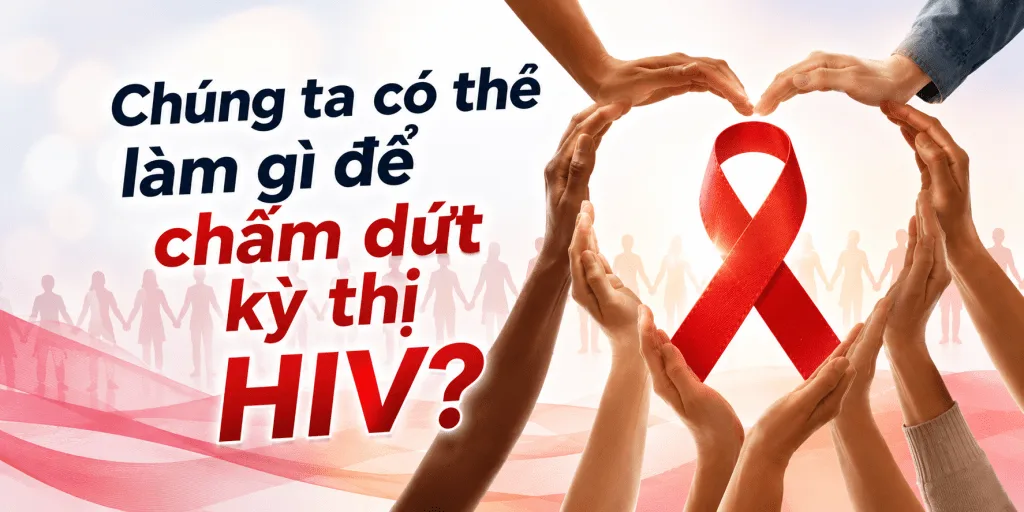
Everyone can contribute to change through simple actions:
- Seek accurate information about HIV
- Do not spread rumors or misinformation
- Respect the privacy of people living with HIV
- Avoid using offensive or discriminatory language
- Encourage regular HIV testing
- Share scientific information with the community
Small changes in awareness and actions can create a significant positive impact on society.
Conclusion
HIV stigma exists in various forms and has serious impacts on health, quality of life, and the effectiveness of HIV/AIDS prevention and control. Eliminating stigma not only helps people living with HIV be respected and treated fairly but also creates conditions for more people to proactively test, treat, and protect their health. Through accurate information from Love2Test.vn, everyone can contribute to building a stigma-free community where everyone can live equally, safely, and with respect.
Further reading
This article provides general information. For decisions about diagnosis, medicines or treatment, consult a qualified healthcare professional. Service availability and costs can change; confirm with the provider before booking. Our editorial approach
Published by Love2Test — Accessible sexual health information