

HIV Risk Factors: Who May Be at Higher Risk?
Discover the high-risk groups for HIV, the causes of transmission, and effective prevention methods to protect your health more effectively.

On this page
HIV remains one of the most concerning public health issues worldwide. Despite modern medical advancements in treatment and prevention, new cases continue to emerge each year. Understanding who belongs to the high-risk group for HIV is an important step in reducing the risk of infection and implementing appropriate protective measures.
Many people believe that HIV is only related to certain groups, but in reality, anyone with risky behavior can be infected. Correct understanding of the high-risk groups for HIV is not meant to stigmatize or discriminate, but to raise awareness of prevention and encourage regular testing.
How Does HIV Spread?
Before understanding the high-risk groups for HIV, it is important to understand how the virus spreads. HIV is mainly transmitted through blood, semen, vaginal fluids, rectal fluids, and breast milk. The virus can enter the body through unsafe sexual practices, sharing needles, or from mother to child during pregnancy, childbirth, and breastfeeding. HIV does not spread through common contact such as handshaking, hugging, sharing food, using the same restroom, or mosquito bites. However, misconceptions about HIV still exist, leading to unnecessary stigma against people living with HIV.
Gay men belong to the high-risk group for HIV
One of the most frequently mentioned high-risk groups for HIV is gay men. This is not related to sexual orientation, but rather to biological and sexual behavior factors. Anal sex has a higher risk of HIV transmission compared to vaginal sex because the rectal mucosa is thin and easily damaged. If condoms are not used or if preventive measures like PrEP are not taken, the risk of infection increases significantly. Additionally, having multiple partners or not undergoing regular HIV testing also increases the risk in this community.
People with multiple partners are also in the high-risk group
People with multiple partners, regardless of gender or sexual orientation, have a higher risk compared to those with a stable monogamous partner. As the number of partners increases, the likelihood of coming into contact with someone who has HIV or other sexually transmitted infections (STIs) also increases. If condoms are not used regularly or if the partner's HIV status is unknown, the risk of infection increases further. The key is not to judge an individual's lifestyle, but to be aware of the risk and apply appropriate protective measures.
People who do not use condoms during sexual activity

Unprotected sexual activity is one of the main causes of HIV transmission. Condoms remain a simple yet effective method to reduce the risk of transmitting HIV and other STIs.
Many people believe that someone who appears healthy cannot be infected with HIV, but in reality, many people infected with HIV do not show symptoms for a long time. Therefore, not using condoms with partners whose HIV status is unknown always carries a risk.
People who inject drugs
People who inject drugs are in a very high-risk group for HIV, especially when sharing needles or injection equipment. Blood residue in needles can contain the HIV virus and directly transmit it into another person's bloodstream. This is a high-risk transmission route if appropriate prevention measures are not taken. Needle exchange programs and drug treatment programs have significantly reduced the rate of HIV transmission in many countries.
People with an HIV-positive partner
If a person has an HIV-positive partner, the risk of infection depends on several factors such as the viral load of the HIV-positive person, condom use, and the use of preventive medication. Currently, people living with HIV who receive effective ARV treatment and achieve an undetectable viral load do not transmit HIV through sexual activity. This principle of "Undetectable = Untransmittable" has been scientifically proven. However, for couples who have not achieved a stable viral load or have not received regular treatment, the use of PrEP and condoms remains very important.
People with other sexually transmitted infections (STIs)
People who have other STIs such as syphilis, gonorrhea, genital warts, or genital herpes are at a higher risk of contracting HIV. The injuries or infections in the genital area can make it easier for the HIV virus to enter the body. Additionally, having an STI indicates that the person may have engaged in risky behaviors. Therefore, HIV testing is often recommended alongside testing for other STIs.
Sex workers and their clients
Sex workers and their clients are also considered a high-risk group for HIV due to the high frequency of sexual activity and the likelihood of coming into contact with multiple partners. In some cases, negotiating condom use can be difficult, increasing the risk of HIV and other STI transmission. Sexual health education programs and free access to condoms have helped significantly reduce the risk in many parts of the world.
Pregnant women need to be tested for HIV
Pregnant women are not always in the high-risk group for HIV, but HIV testing during pregnancy is very important to protect both the mother and the baby. If HIV is detected early and treated properly, the risk of transmission from mother to child can be reduced to less than 1%. This is why many countries recommend HIV testing as part of routine prenatal care.
Youth and young people are at an increasing risk
In many countries, the rate of HIV infection among the youth is increasing due to a lack of knowledge about sexual health and a sense of complacency. Many young people do not fully understand how HIV is transmitted or are reluctant to get tested due to fear of judgment. Some believe that HIV is no longer as dangerous as before, so they pay less attention to prevention. Comprehensive sex education and access to accurate information are important factors in reducing the risk in this group.
Are the symptoms of HIV infection clear?
One of the most dangerous aspects of HIV is that many people do not show symptoms for many years. Some people may experience symptoms similar to the flu, such as fever, sore throat, swollen lymph nodes, or rashes in the early stages, but these symptoms are often overlooked. Therefore, it is not possible to determine if someone has HIV just by observing them externally. HIV testing remains the only way to accurately know one's infection status.
Why is regular HIV testing important?
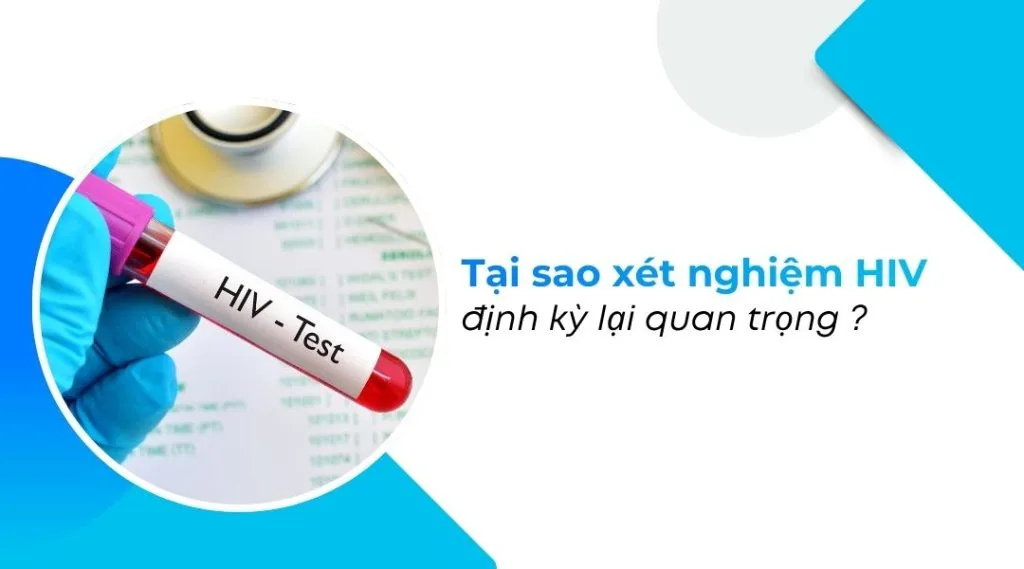
Regular HIV testing helps detect the infection early for timely treatment and reduces the risk of transmission to others. Today, HIV treatment has advanced significantly, allowing people living with HIV to have a life expectancy and quality of life close to that of the general population. For high-risk groups, regular testing every 3–6 months is often recommended. Testing not only helps protect oneself but also contributes to controlling the HIV epidemic in the community.
How does PrEP reduce the risk of HIV?
PrEP is a preventive medication for people who are not infected with HIV but are at high risk. When used correctly, PrEP can reduce the risk of HIV transmission through sexual activity by up to over 90%. PrEP is becoming an important tool in modern HIV prevention strategies, especially for high-risk groups such as gay men, people with multiple partners, or people with an HIV-positive partner. However, PrEP does not completely replace condoms because the medication does not protect against other STIs.
How can the risk of HIV infection be reduced?
Reducing the risk of HIV infection requires a combination of different measures. Correct use of condoms, regular HIV testing, early treatment of HIV, and the use of PrEP are effective methods that have been scientifically proven. In addition, increasing knowledge about sexual health and reducing stigma around HIV play a very important role. When people feel safe and are not judged, they are more likely to actively get tested and access treatment.
The high-risk groups for HIV are not limited to a specific community but are mainly related to behavior and the level of exposure to infection risk. Understanding the high-risk groups for HIV helps each person actively protect their own health and the community through regular testing, using appropriate preventive measures, and accessing accurate information. HIV today is no longer a "death sentence" as before, and with the right knowledge and prevention, the risk of infection can be effectively reduced.
Further reading
This article provides general information. For decisions about diagnosis, medicines or treatment, consult a qualified healthcare professional. Service availability and costs can change; confirm with the provider before booking. Our editorial approach