Health
HIV Treatment Medicines: Oral and Injectable Options
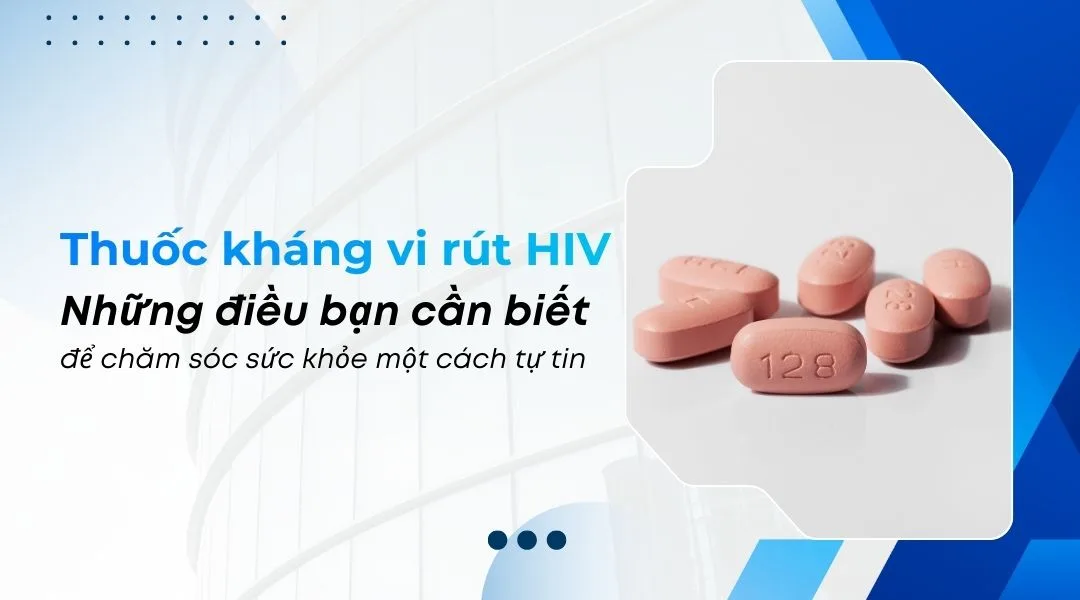
Currently, there are many types of HIV treatment drugs, ranging from once-daily pills like Biktarvy, Dovato to long-acting injectable drugs.
Updated

On this page
Today, HIV treatment has advanced so far that many people starting treatment or recently diagnosed may be surprised when their doctor prescribes just 1 pill a day — whereas in the past, multiple pills were required and there were many side effects. This article provides a detailed, easy-to-understand guide to HIV treatment drugs — including the latest generation, standard regimens, and special types — with key information summaries for those starting treatment or wanting to update their knowledge. Easy to read, practical, and up-to-date with current standards.
What are HIV treatment drugs? Why must they be taken every day?
HIV treatment drugs, also known as ART (Antiretroviral Therapy) / antiviral drugs, work by inhibiting the replication of the HIV virus, reducing the viral load to an undetectable level (Undetectable).
Why must the drugs be taken every day?
- Because the HIV virus replicates very quickly
- If you frequently miss doses → the virus becomes drug-resistant
- Once drug resistance develops → the old regimen is no longer effective, and you must switch to a more expensive regimen that may have more side effects
"Taking medication on time is the most important thing in HIV treatment at all times."

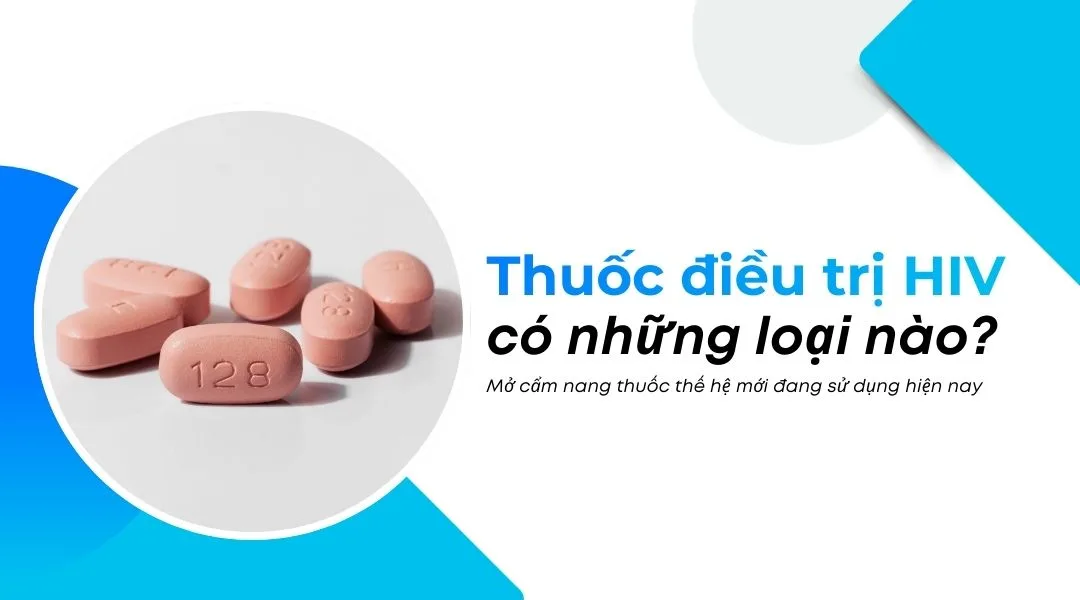
How many types of HIV treatment drugs are available today?
To make it easier to understand, we divide them into 3 major groups as follows:
- Single Tablet Regimen (STR) — 1 pill per day
- Multi-tablet regimen — multiple pills
- Long-acting injectable drugs — new generation
Each type differs in terms of convenience, side effects, cost, and suitability for different body conditions.
1) Single Tablet Regimen (STR) — 1 pill per day
This is the most common regimen because it is convenient — just 1 pill per day is sufficient for all the necessary components. There are 4 widely used groups:
Atripla® (Efavirenz + Emtricitabine + Tenofovir DF)
Advantages:
- It is a first-generation regimen
- It is relatively cost-effective
- Take 1 time a day
Disadvantages:
- It has many side effects
- It may affect the mental state of some people
- It is no longer the recommended regimen for starting treatment
Genvoya® (EVG/c/FTC/TAF)
Advantages:
- Gentle on the kidneys and bones
- Fewer side effects
- Take 1 time a day
Disadvantages:
- Must be taken with food
- More expensive than regimens with TDF
- Caution is needed when used with other drugs
Biktarvy® (BIC/FTC/TAF) — the most popular drug globally
This is considered the most widely used new-generation HIV treatment drug today.
Advantages:
- Highly effective in suppressing the virus
- No need to take with food
- Take 1 time a day
- Fewest side effects
- Suitable for people starting treatment
Disadvantages:
- Care must be taken in people with co-infection of hepatitis B
- Not suitable for people with difficulty swallowing pills
- Not suitable for people with kidney failure
- Cannot be combined with certain other drugs
- May affect the kidneys and weight
Many doctors choose Biktarvy as the 'first-line drug' for new HIV patients due to its rapid effectiveness and safety.
Dovato® (DTG + 3TC) — 2-drug regimen
The special feature is that this is an antiviral drug with only 2 active ingredients instead of 3 as in other regimens.
Advantages:
- Reduces long-term side effects
- Reduces burden on the liver and kidneys
- Very effective in suppressing the virus
Disadvantages:
- Only suitable for people who are not resistant to 3TC
- Must start when the viral load is not too high
- Not suitable for people with hepatitis B co-infection
2) Multi-tablet regimen — multiple pills
Suitable for cases requiring personalized adjustments, with underlying conditions, experiencing side effects from STR regimens, or having resistance to certain drug groups.
The main drug groups currently in use are:
Integrase Inhibitors (INSTIs)
This is the main group today because it is strong, fast, and safe:
- Dolutegravir (DTG)
- Bictegravir (BIC)
- Raltegravir (RAL)
NRTIs
These are the base drugs used in combination with Integrase:
- TDF (Tenofovir DF)
- TAF (Tenofovir AF)
- 3TC (Lamivudine)
- FTC (Emtricitabine)
NNRTIs
Used less frequently now but still have a role in certain cases:
- Efavirenz (EFV)
- Rilpivirine (RPV)
Protease Inhibitors (PIs)
Suitable for people with a certain level of drug resistance:
- Atazanavir (ATV)
- Darunavir (DRV)
However, the PI group has many side effects such as increased cholesterol and jaundice, so it is rarely used as a starting regimen.
3) Long-acting injectable drugs — a new emerging trend
This is a new technology currently used in many countries, although it is not yet widespread in some areas.
Cabenuva® (Cabotegravir + Rilpivirine)
Form:
- Injectable every 1 month, or
- Injectable every 2 months
Advantages:
- No need to take pills every day
- Suitable for people who often forget to take pills
- Fewer side effects
Limitations:
- Not to be used if there is a history of resistance to RPV
- Must attend appointments on schedule, cannot be missed
In the future, injectable drugs will be the main choice for those who do not want to take pills every day.
Comparison table of currently popular HIV treatment drugs
| Drug name | Number of active ingredients per pill | Dosage | Key features |
|---|---|---|---|
| Biktarvy | 3 | 1 pill per day | Highly effective, convenient, few side effects |
| Dovato | 2 | 1 pill per day | Reduces liver and kidney burden |
| Genvoya | 4 | 1 pill per day | Gentle on the kidneys |
| Atripla | 3 | 1 pill per day | Not too expensive |
| Cabenuva | Injectable form | Every 1–2 months | No need to take pills daily |
New-generation HIV treatment drugs currently receiving attention
The medical field is developing many new drugs such as:
- Long-acting injectable drugs every 3–6 months
- Patch-form drugs
- New-generation drugs that only need to be taken 1 time a week
The future of HIV treatment will become increasingly simple.
What factors should be considered when choosing HIV treatment drugs?
Many people think doctors prescribe drugs according to general standards, but in reality, there are many factors to consider:
- Kidney function: TDF may affect the kidneys — people with weak kidneys are prescribed TAF or Dovato
- Blood fat: Some drugs increase blood fat, such as the PI group
- Liver disease: If there is co-infection with hepatitis, certain drug groups should be avoided
- Pregnancy: DTG & EFV are special considerations for doctors
- Drug resistance history: Some regimens cannot be used if there is prior drug resistance
- Medication adherence: People who often forget may be more suitable for injectable drugs
Why are new-generation drugs superior to older drugs?
Because new-generation drugs are designed to:
- Have fewer side effects
- Be more convenient
- Be easier to use
- Be safer in the long term
- Bring the virus to an undetectable level very quickly
- Reduce the risk of drug resistance
Compared to the past, when many pills had to be taken daily with numerous side effects — today, HIV treatment is getting closer to the concept of a 'manageable chronic disease.'
Are the side effects of HIV treatment drugs worth worrying about?
Most are very few and usually occur only in the early stages. Possible symptoms may include:
- Lightheadedness
- Drowsiness
- Dizziness
- Nausea
- Insomnia
If the side effects are severe → the regimen may be changed. Today, doctors will choose the regimen with the fewest side effects from the start.
Why must Viral Load and CD4 be tested alongside drug use?

Because these are indicators of treatment effectiveness:
- Viral Load = amount of virus in the blood. If it is low enough to be undetectable (below 20–40 copies) → well-controlled
- CD4 = immune cells. If it increases → the body is recovering
A good regimen + taking medication on time = rapid reduction in Viral Load
Do I have to take medication for life?
The answer is Yes — but with new-generation drugs, taking just 1 pill a day is easy, like taking a daily vitamin. If you stop medication on your own → the virus will increase immediately and may become drug-resistant.
How can I achieve the best treatment effectiveness?
- Take medication on time — set an alarm if needed; do not take it more than 2 hours earlier or later than the usual time
- Do not skip medication — take it immediately when you remember
- Attend scheduled appointments for blood tests and regimen adjustments
- Drink plenty of water to reduce side effects
- Inform your doctor immediately if you experience any unusual symptoms
Summary — Today's HIV treatment drugs are much better than before
- New-generation drugs = easy to take, only 1 pill per day
- Quick and safe virus suppression
- Fewer side effects
- Injectable regimens for people who often forget to take pills
- Current treatment allows for a completely normal life
If you have just started treatment, don't worry because today's doctors will choose the 'best and most suitable' regimen for you from the very first day.
Read interesting articles
Further reading
This article provides general information. For decisions about diagnosis, medicines or treatment, consult a qualified healthcare professional. Service availability and costs can change; confirm with the provider before booking. Our editorial approach
Published by Love2Test — Accessible sexual health information