Health
Before Starting PrEP: Tests and Preparation
What tests are needed before starting PrEP? Find out about HIV testing, kidney function, hepatitis B, STI, and how to prepare before receiving PrEP safely.
Updated

On this page
PrEP is a method to reduce the risk of HIV infection before exposure. This is a suitable choice for many people at risk of HIV. However, you should not self-purchase the medication and start using it immediately. Before starting PrEP, you need to check your HIV status and assess your general health. Some people also need kidney function tests, hepatitis B tests, and STI tests. These steps help healthcare professionals choose the appropriate PrEP option. They also make the follow-up process more convenient. The following article will explain each step needed to prepare before receiving PrEP.
Why is it important to check your health before starting PrEP?
PrEP is used for HIV prevention in people who are not infected with HIV. Therefore, an HIV test is a very important step before using the medication. Healthcare professionals also need to ask about your most recent exposure. This information helps assess the risk of early HIV infection. In addition, some types of oral PrEP require kidney function tests before use. You may also be tested for hepatitis B and STIs. The test results help doctors choose a more suitable PrEP option. This is also the basis for monitoring your health during medication use.
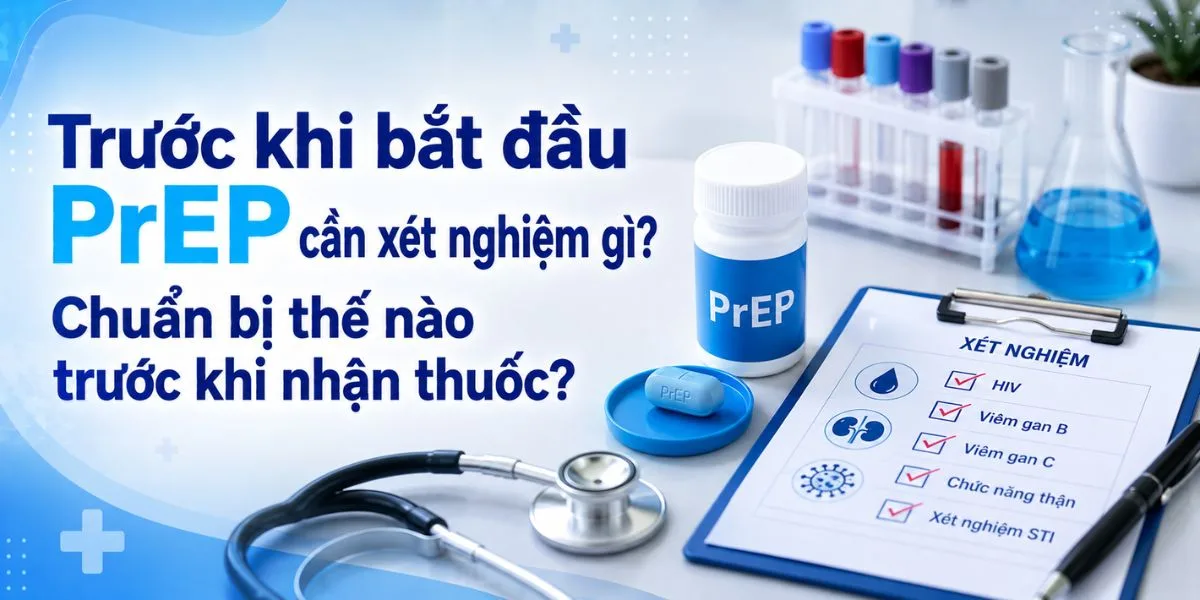
What tests are needed before starting PrEP?
The tests may vary for each person. This depends on the type of PrEP and your health condition. Risk behaviors also influence the type of test needed. Healthcare professionals will assess each case before prescribing.
- HIV test: Confirms that you are not infected with HIV before starting PrEP.
- Kidney function test: May be necessary for some oral PrEP types.
- Hepatitis B test: Helps determine the infection or immunity status to the hepatitis B virus.
- Syphilis test: Helps detect the infection even without symptoms.
- Gonorrhea test: May be taken from multiple sites depending on sexual behavior.
- Chlamydia test: Usually performed alongside other STI tests.
- Pregnancy test: May be recommended for those who can become pregnant.
Healthcare professionals may request additional tests. This depends on the individual's history and condition.
How important is the HIV test before using PrEP?
The HIV test is the most important step before starting PrEP. PrEP is for people who are not infected with HIV. The medication is not a complete treatment regimen for those who are already infected with HIV. Therefore, it is necessary to confirm your HIV status before receiving the medication. You should also inform about your most recent risk exposure. Some cases of early HIV infection may not be detected immediately. This is called the window period. If there was a recent risk, the doctor may request additional tests. You should also report if you have had fever, rash, or sore throat after exposure. This information helps healthcare professionals assess the risk more accurately.
Is it necessary to check kidney function before using PrEP?
Some oral PrEP types contain tenofovir. Therefore, users may need to check their kidney function before starting. Creatinine tests are commonly used during the assessment. Doctors may use the results to evaluate kidney filtration function. Those with a history of kidney disease should inform their healthcare provider before receiving PrEP. You should also provide a list of medications you are currently using. Some medications may affect kidney function. However, the requirement for testing may vary between PrEP types. The doctor will choose an appropriate option for each case.
Common tests before starting PrEP
| Test or evaluation | Purpose | Timing |
|---|---|---|
| HIV test | Confirm HIV-negative status | Before starting PrEP |
| Kidney function | Assess suitability for some oral PrEP types | Before starting the medication |
| Hepatitis B | Determine infection or immunity status | During the initial evaluation |
| Syphilis | Detect STI | When starting PrEP |
| Gonorrhea | Detect gonorrhea infection at risk sites | Based on risk assessment |
| Chlamydia | Detect chlamydia infection | Based on risk assessment |
| Pregnancy | Support appropriate care selection | When indicated |
Is it necessary to test for STIs before receiving PrEP?
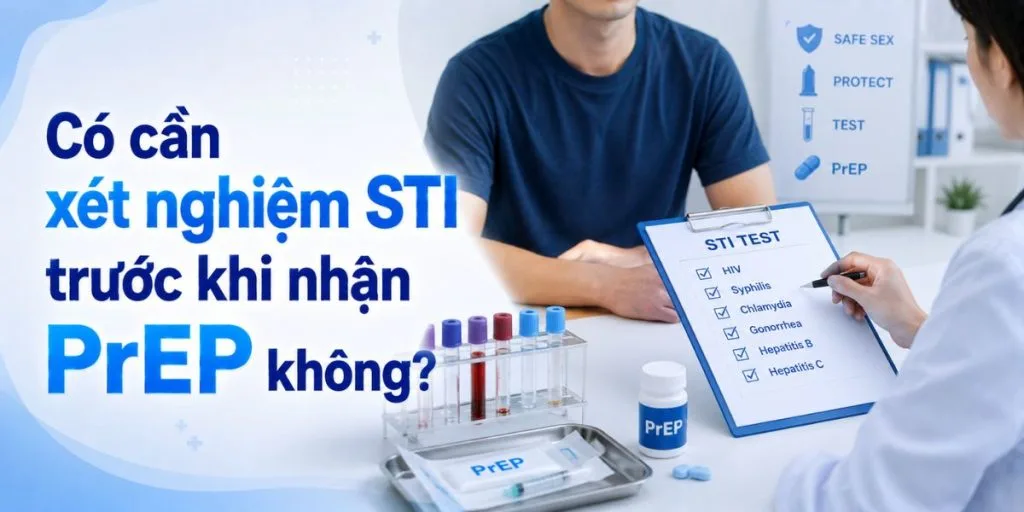
PrEP helps prevent HIV but does not prevent all STIs. Therefore, STI screening is still very important. Common tests include syphilis, gonorrhea, and chlamydia. Many STIs do not cause clear symptoms. You may feel healthy but still be infected with an STI. The sampling site also depends on sexual behavior. Some people need testing at the throat or rectum. Others may need urine or genital samples. Healthcare professionals will advise you on the appropriate test for your case.
Why is it necessary to test for hepatitis B before using PrEP?
Some PrEP medications also have an effect on the hepatitis B virus. Therefore, knowing your hepatitis B status is very useful. Testing helps determine if you have immunity or not. It also helps detect cases of hepatitis B infection. Those without immunity may be advised about vaccination. Those infected with hepatitis B can still have suitable PrEP options. However, medication use must be properly monitored. Especially, you should not stop certain PrEP medications without a doctor's guidance. Stopping medication may require additional monitoring by a doctor.
What should you prepare before seeing a doctor to receive PrEP?
You do not need to prepare too much before the consultation. However, some information will help speed up the evaluation process. Please provide the most honest information possible. Questions about sexual behavior are used to assess your health. The purpose is not to judge the user.
- The most recent HIV risk exposure.
- Recent HIV test results if available.
- Common sexual activity forms.
- Use of condoms in recent times.
- History of PrEP use.
- History of PEP use.
- Current medications being used.
- History of kidney disease or hepatitis B.
- History of STI infections.
- Recent unusual symptoms.
You can also prepare questions before the appointment. This helps you understand more about how to use PrEP.
What should you do if you recently had an HIV risk exposure?
Inform healthcare professionals immediately if you recently had an HIV risk exposure. The timing of the exposure is very important. If the exposure occurred within 72 hours, PEP may be an option that needs to be evaluated. PEP is post-exposure prophylaxis for HIV. The medication should be started as soon as possible. You should not wait until the next day if you can access services immediately. After completing PEP, some people may transition to PrEP. The doctor will guide the appropriate timing for the transition. If it is already past 72 hours, you should still go for testing and receive counseling. You should not self-use PrEP to replace PEP.
Should you choose daily PrEP or another option?

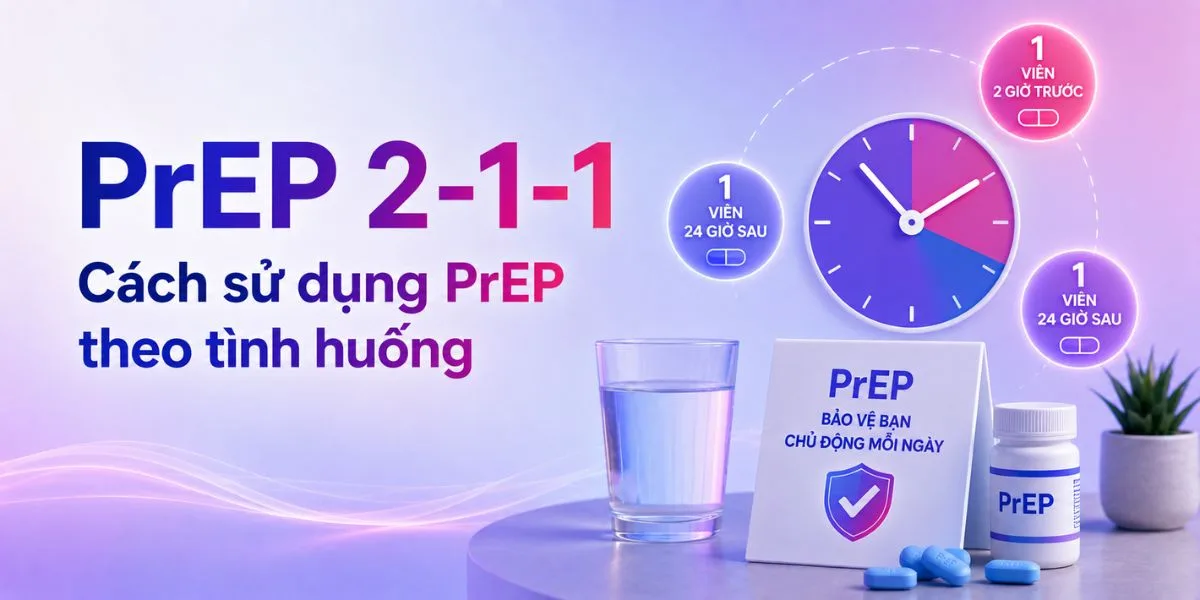
PrEP currently has several usage methods. Daily oral PrEP is the most common option. This method is suitable for many people at risk of HIV. Some people may be advised about the 2-1-1 PrEP method. However, this method is not suitable for everyone. Some areas also have injectable PrEP. The availability depends on the country and healthcare facility. The doctor will consider risk behaviors and health status. The ability to maintain a medication schedule is also very important. Therefore, you should not choose based solely on others' experiences.
What should you monitor after starting PrEP?
Care does not end after starting PrEP. Users still need to follow-up according to the schedule. Regular HIV testing is an important part of the monitoring process. Some people need regular kidney function tests. STI screening may also be performed based on risk. You should inform your doctor if you experience any side effects. Discuss if you often forget to take the medication. The doctor may help find a more suitable option. You should also ask before deciding to stop PrEP. This is especially important for people with hepatitis B.
Before starting PrEP, you need to confirm your HIV status first. Some people also need to check kidney function and hepatitis B. STI testing is often recommended based on risk. Inform healthcare professionals about your most recent HIV exposure. If the exposure occurred within 72 hours, ask about PEP as soon as possible. You should also provide information about your current medications and medical conditions. After starting PrEP, follow-up is still very important. Adhering to the schedule helps maintain the effectiveness and safety of PrEP.
Further reading
This article provides general information. For decisions about diagnosis, medicines or treatment, consult a qualified healthcare professional. Service availability and costs can change; confirm with the provider before booking. Our editorial approach
Published by Love2Test — Accessible sexual health information