Health
How to Use Condoms Correctly for Beginners
A beginner's guide to using condoms correctly, from choosing and checking a condom to safer use, removal and disposal.
Updated

On this page
How to use condoms correctly is one of the important pieces of knowledge to protect sexual health and reduce the risk of unintended pregnancy. Although condoms are a common and easily accessible method, many beginners still do not fully understand how to use condoms effectively and safely. In this article, Love2Test.vn will guide you through each step of using condoms correctly, while sharing important notes to help you feel more confident during every sexual encounter.
Why should you use condoms?
Condoms are considered one of the most effective protective measures today.
Correct condom use helps:
- Reduce the risk of HIV transmission.
- Prevent sexually transmitted infections (STIs).
- Prevent unintended pregnancy.
- Increase confidence and safety for both partners during sexual activity.
In addition, condoms are easy to purchase, use, and suitable for many different individuals.
How to choose the right condom
Before learning how to use condoms, choosing the right product is also very important.
Choose the right material
Currently, condoms are usually made from:
- Latex (natural rubber)
- Polyurethane
- Polyisoprene
If you are allergic to latex, you should choose condoms that do not contain latex.
Choose the right size
Condoms that are too tight can cause discomfort or increase the risk of tearing.
Condoms that are too loose can easily slip during sexual activity.
Choosing the correct size helps increase safety and comfort.
Choose suitable features
Some condoms have additional features such as:
- Lubricant
- Stimulating ridges or textures
- Scents
- Ultra-thin design
You can choose based on your personal needs and preferences.
Guide to using condoms correctly
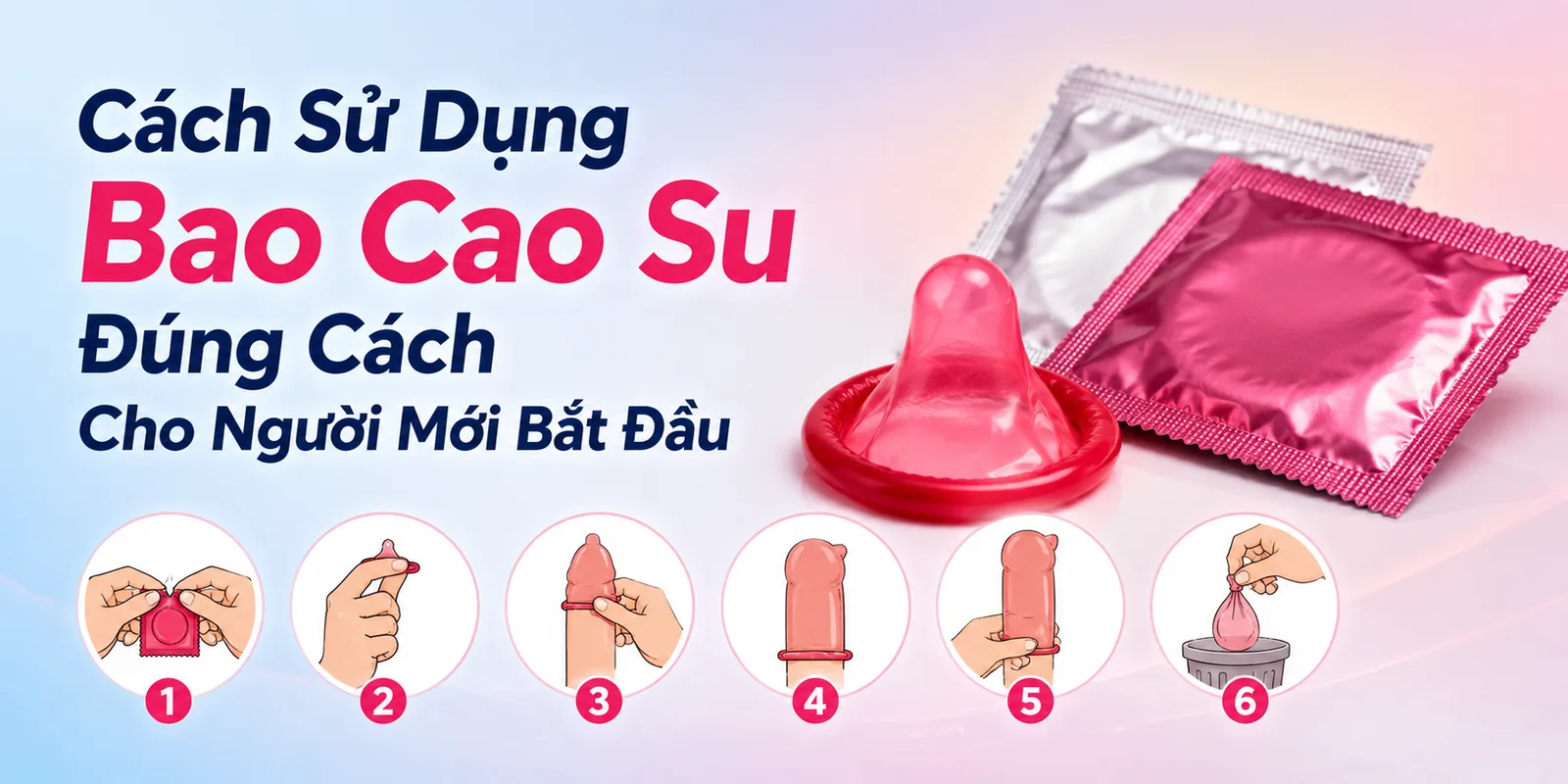
Step 1: Check the packaging and expiration date
Before using:
- Check the production date and expiration date.
- Ensure the packaging is intact.
- Do not use if the condom is torn or shows signs of damage.
Step 2: Open the condom carefully
Use your fingers to tear along the serrated edge of the packaging.
Do not use:
- Pulling
- Scissors
- Teeth
- Sharp objects
as this can tear the condom.
Step 3: Put on the condom when the penis is erect
Place the condom over the head of the penis.
Squeeze the tip of the condom to remove air inside.
This helps reduce the risk of tearing during sexual activity.
Step 4: Roll the condom down the full length of the penis
Use your hand to roll the condom from the head to the base of the penis.
Ensure:
- The condom is not twisted.
- The condom is not folded.
- The condom covers the entire penis.
Step 5: After ejaculation
After ejaculation, hold the base of the condom firmly before withdrawing the penis.
Do this while the penis is still erect to prevent semen from leaking out.
Step 6: Remove and dispose of properly
After removal:
- Tie the open end of the condom.
- Wrap in toilet paper if needed.
- Dispose of in the trash.
Do not flush condoms down the toilet as it can cause blockages in the drainage system.
Important notes when using condoms
Do not reuse
Condoms are designed for single-use only.
Reusing can increase the risk of:
- Tearing
- Slipping
- Transmission of sexually transmitted diseases
Store properly
Store condoms in a place that is:
- Dry
- Well-ventilated
- Avoid direct sunlight
Do not leave condoms in a wallet or car for too long as high temperatures can reduce product quality.
Use suitable lubricants
If additional lubricant is needed, use:
- Water-based lubricants
- Silicone-based lubricants
Do not use oil-based products as they can damage latex condoms.
Frequently asked questions about using condoms
Are condoms easy to tear?
If used correctly and within the expiration date, condoms have a relatively high durability.
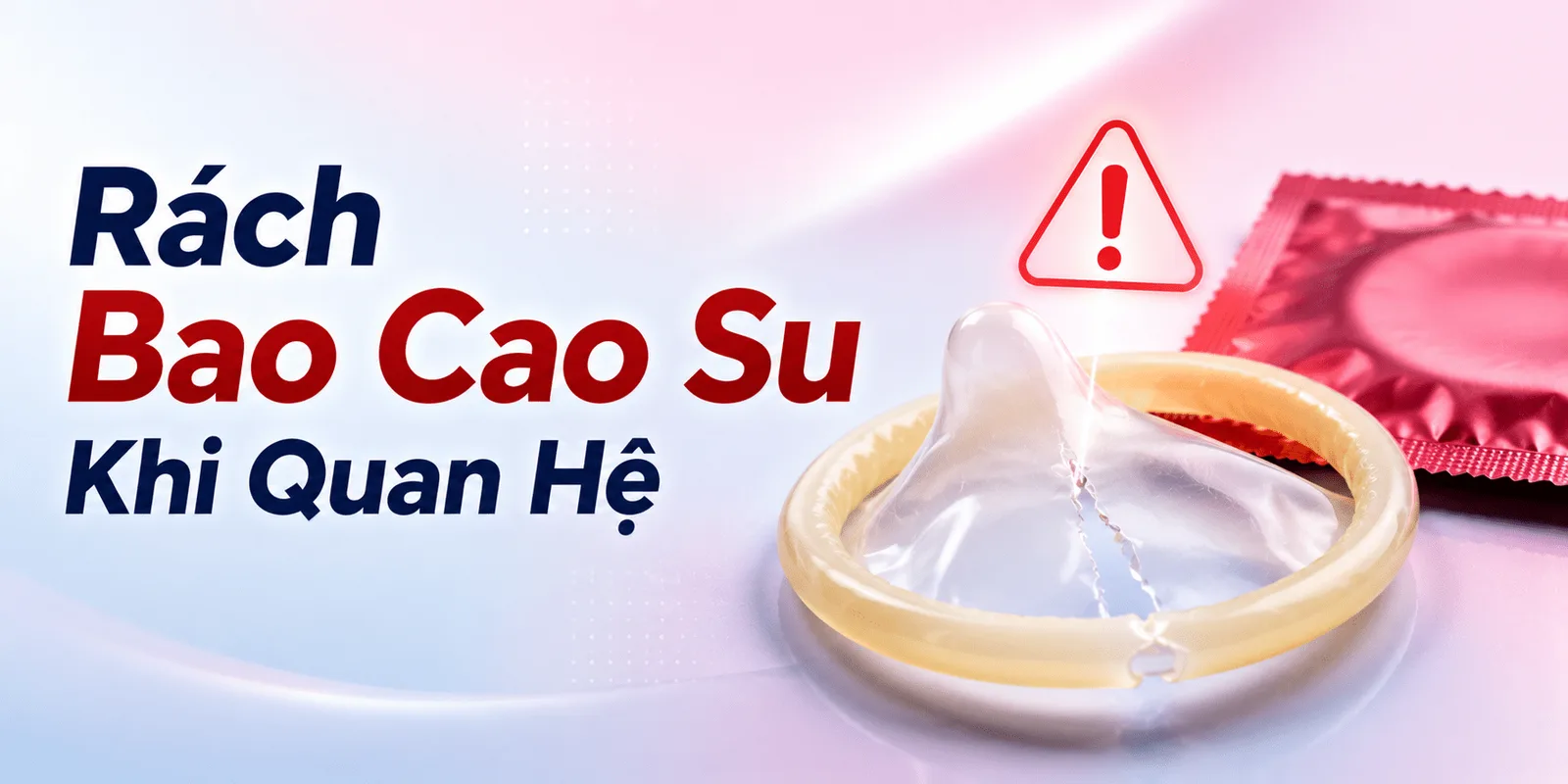
Common causes of condom tearing include:
- Incorrect use
- Failing to remove air from the tip
- Using incompatible lubricants
- Using expired condoms
Do condoms provide absolute protection?
No method provides 100% protection in all cases.
However, when used correctly, condoms are among the most effective methods to prevent HIV, STIs, and unintended pregnancy.
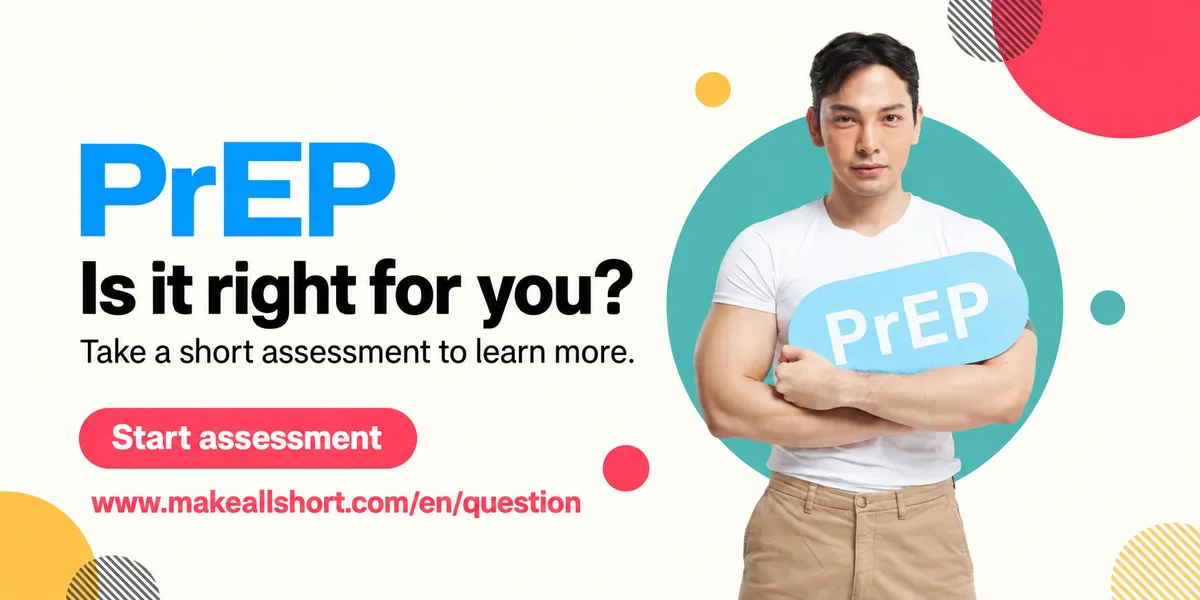
Is it necessary to use condoms when using PrEP?
PrEP is effective in preventing HIV but does not protect against:
- Gonorrhea
- Syphilis
- Chlamydia
- Genital warts
- Other STIs
Therefore, combining PrEP with condoms is still recommended for comprehensive health protection.
Condoms and their role in HIV prevention
Condoms are one of the most important tools in the current strategy for HIV prevention.
When combined with:
- Regular HIV testing
- PrEP
- PEP
- Comprehensive sexual health knowledge
the risk of HIV transmission can be significantly reduced.
At Love2Test.vn, you can learn more about HIV, PrEP, PEP, HIV testing, and other safe sexual health protection methods for all individuals.
Conclusion
Understanding how to use condoms correctly is an important step in protecting yourself and your partner from HIV, STIs, and unintended pregnancy. With just a few simple steps, performed correctly, it can increase the effectiveness of protection and provide peace of mind during every intimate moment. Do not forget to combine condoms with regular health check-ups and suitable prevention methods to ensure comprehensive sexual health care.
This article provides general information. For decisions about diagnosis, medicines or treatment, consult a qualified healthcare professional. Service availability and costs can change; confirm with the provider before booking. Our editorial approach
Published by Love2Test — Accessible sexual health information