Health
How Long Should You Take PEP? Timing and Follow-Up Tests
How long should PEP be taken to prevent HIV? Learn about the 28-day PEP regimen, the 72-hour window, how to take the medication, and when to get an HIV test after PEP.
Updated

On this page
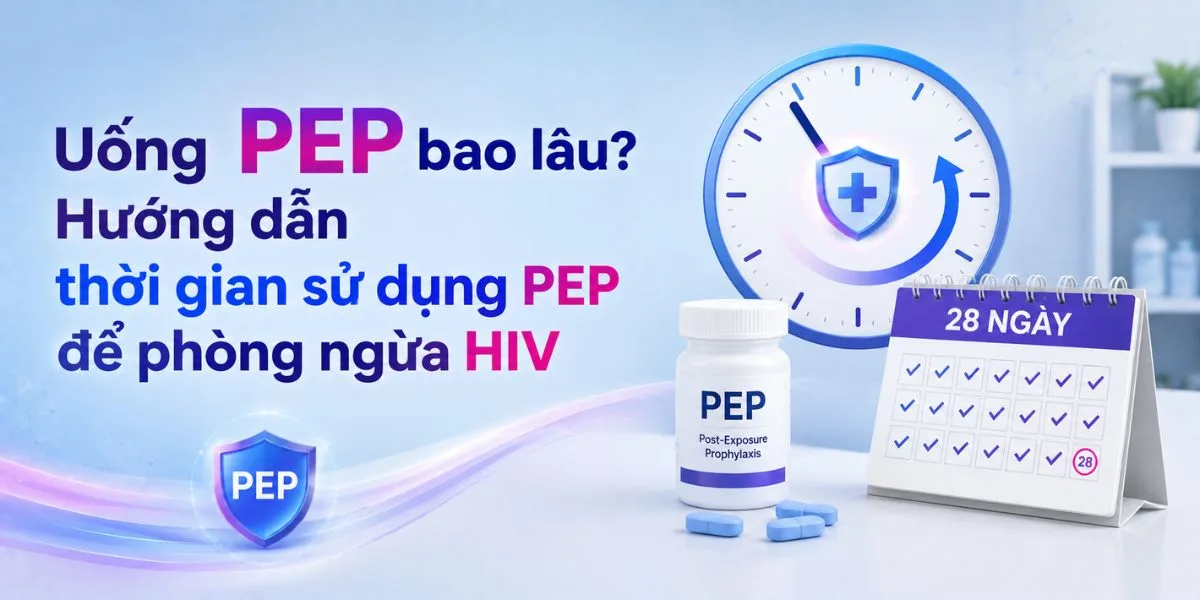
How long should PEP be taken is a common question after a potential HIV exposure situation. PEP stands for Post-Exposure Prophylaxis. It is a method of HIV prevention using antiviral drugs after exposure. Typically, PEP is used for 28 days. However, the duration of taking the medication is not the only factor determining effectiveness. The timing of starting PEP is also very important.
Firstly, PEP needs to be started as soon as possible after exposure. According to current guidelines, the medication should be started within 72 hours if indicated. In addition, users need to take the medication regularly throughout the regimen. Stopping the medication on one's own can affect the effectiveness of prevention. Therefore, if you have just experienced a potential HIV exposure situation, you should contact a healthcare facility as soon as possible. A doctor will assess the risk and determine if PEP is appropriate.
How long should PEP be taken and how long is the typical regimen?
The short answer to How long should PEP be taken is that PEP is usually taken continuously for 28 days. During this time, users need to take the medication according to the prescribed regimen. At the same time, it is advisable to take the medication regularly at suitable times each day. However, you should not stop the regimen on your own after taking it for a few days. Feeling healthy is not a reason to stop PEP.

In addition, you should not extend the duration of medication use on your own. Any changes related to the regimen should be evaluated by healthcare professionals. Therefore, complete the regimen as instructed. If you encounter difficulties during the medication process, you should contact the treatment facility.
Why should PEP be started as soon as possible?
PEP is used after a situation with potential HIV exposure. Therefore, the timing of starting the medication is very important. After HIV enters the body, the virus needs time to establish an infection. Therefore, starting PEP early allows the medication to intervene in this process.
Typically, PEP needs to be started within 72 hours after exposure if indicated. However, you should not wait for the 72-hour mark.
On the contrary, seek medical services as soon as possible. If possible, the evaluation should be done in the early hours. Therefore, if a risk has just occurred, do not wait for symptoms to appear. Early HIV stages may not cause clear symptoms.
Important time markers when using PEP
To understand How long should PEP be taken, you should remember some important markers. This helps make the medication process easier to track.
- Immediately after exposure: contact a healthcare facility to assess the risk.
- In the early hours: start PEP as soon as possible if indicated.
- Within 72 hours: this is an important time window to start PEP.
- On the first day: use the medication according to the prescribed regimen.
- Within 28 days: continue taking PEP regularly.
- During the medication period: monitor for adverse effects.
- After completing PEP: get an HIV test according to the scheduled timeline.
- If a new risk occurs: inform healthcare staff.
- If risks occur frequently: discuss PrEP with a healthcare provider.
Thus, two important numbers are 72 hours and 28 days. In which, 72 hours relates to the starting time. Conversely, 28 days is the duration of the typical PEP regimen.
How does PEP work to prevent HIV?
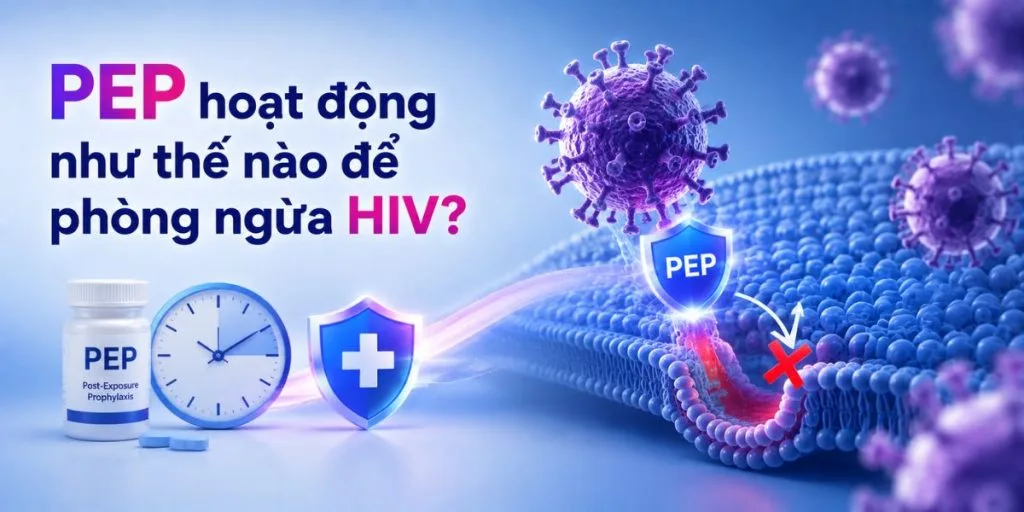
PEP uses antiviral drugs to reduce the likelihood of HIV establishing an infection after exposure. Therefore, the medication needs to be started early. After entering the body, HIV begins the replication process. However, antiviral drugs can intervene in important stages of this process. Therefore, starting the medication at the right time is significant. At the same time, taking the medication regularly helps maintain the effectiveness of the regimen.
However, PEP is not an HIV vaccine. The medication also does not provide long-term protection against future exposures. Therefore, if you frequently face HIV risks, you should consult a doctor about PrEP. This is a pre-exposure prophylaxis method for people who do not have HIV.
Comparing important time markers of PEP
| Time marker | Significance | What to do? |
|---|---|---|
| Immediately after risk | Important time to assess | Contact a healthcare facility |
| Early hours | PEP should be started early | Do not delay |
| Within 72 hours | Time window to start PEP | Get assessed as soon as possible |
| After 72 hours | Standard PEP is usually not recommended | Still consult medical advice |
| Within 28 days | Typical PEP regimen | Take medication as instructed |
| After completion | Continue monitoring | Get HIV tested as scheduled |
| New risk | May change the monitoring plan | Inform the doctor |
| Frequent risk | Longer-term prevention strategy needed | Consider PrEP |
In general, How long should PEP be taken should not be understood solely in terms of the number of days of medication. The starting time is just as important. Therefore, remember the simple principle: start as soon as possible and complete the full 28 days as instructed.
Should you stop PEP on your own after taking it for a few days?
You should not stop PEP on your own just because you feel healthy. In fact, external health status cannot indicate whether PEP has completed its task or not. In addition, not having symptoms does not mean there is no HIV risk. Therefore, symptoms are not a basis for deciding to stop the medication.
If PEP has been prescribed, users usually need to complete the 28-day regimen. However, some situations may require a doctor to reassess. For example, new information about the exposure situation may change the treatment plan. In that case, the doctor will provide appropriate guidance.
Therefore, do not change the regimen on your own. If you want to stop the medication for any reason, discuss it with the treatment facility first.
How to complete the 28-day PEP regimen?
Maintaining regular medication intake may be difficult for some people. However, a few small changes can help you comply better.
- Choose a suitable time to take the medication based on your daily routine.
- Set a daily alarm on your phone.
- Combine taking the medication with a fixed habit.
- Carry enough medication if you need to travel or go on business trips.
- Regularly check the remaining medication quantity.
- Do not change the dosage on your own.
- Do not use someone else's PEP medication.
- Discuss with your doctor if you experience side effects.
- Ask healthcare staff if you are unsure how to handle a missed dose.
- Remember your follow-up appointments and HIV testing schedule.
In addition, you can store the medication in a memorable location while ensuring proper storage conditions. This helps reduce the risk of forgetting the medication.
What should you do if you forget a dose of PEP?
Forgetting a dose may occur during the PEP regimen. However, you should not panic or change the dosage on your own. First, check the instructions provided when you received the medication. The handling method may depend on how late the dose is and the type of medication being used.
In addition, you should not double up on a dose to make up for the missed one. Instead, contact healthcare staff if you are unsure what to do. If you have missed several doses, it is even more important to consult your doctor. The doctor can assess the extent of the interruption and provide appropriate guidance.
After that, use alarms or medication reminder apps. This helps reduce the risk of missing subsequent doses.
What side effects can occur from taking PEP?
Some people may experience unwanted side effects when taking PEP. However, the manifestations may vary from person to person. For example, some people may feel nausea or headaches. In addition, fatigue and gastrointestinal discomfort may also occur.
In many cases, these symptoms are mild. Then, the body may gradually adapt to the medication. However, if the symptoms are severe or prolonged, contact your doctor. You should not stop the medication solely because of side effects.
In addition, inform healthcare staff about any other medications you are taking. This helps healthcare professionals assess the risk of drug interactions.
Do you need an HIV test after completing the full 28-day PEP regimen?
Yes. Completing the PEP regimen does not mean the monitoring process has ended. After the regimen, you still need to get an HIV test according to the schedule provided by the healthcare facility. This helps assess the HIV status after exposure. However, the timing of the test may vary. This depends on the type of test and the professional guidelines being applied.
In addition, if a new risk occurs, the testing schedule may need to be adjusted. Therefore, fully inform healthcare staff. Finally, depending on the exposure situation, you may also be advised to get tested for other STIs.
Does PEP prevent other sexually transmitted infections (STIs)?
No. PEP is used to reduce the risk of HIV infection after a suitable exposure. Therefore, PEP does not prevent all sexually transmitted infections. You may still be at risk for other infections. For example, syphilis, gonorrhea, and chlamydia are not prevented by HIV PEP. Similarly, PEP does not replace the HPV vaccine or the hepatitis B vaccine.
Therefore, depending on the situation, a doctor may recommend STI testing. Condoms still play a role in reducing the risk of many infections. In general, the visit to receive PEP is also an opportunity to evaluate overall sexual health more comprehensively.
When should you switch from PEP to PrEP?
PEP is suitable for unexpected or infrequent HIV exposure situations. In contrast, PrEP is designed for pre-exposure prophylaxis. Therefore, if you frequently need PEP, you should discuss PrEP with healthcare staff.
PrEP may be suitable for people who do not have HIV but are at risk of future HIV exposure. However, users need to be assessed before starting.
In addition, switching from PEP to PrEP needs to be planned appropriately. The goal is to maintain prevention while avoiding unnecessary gaps. Therefore, you can discuss PrEP during your PEP follow-up appointment. This is a more proactive way to manage long-term HIV risk.
Key points to remember during the 28-day PEP regimen
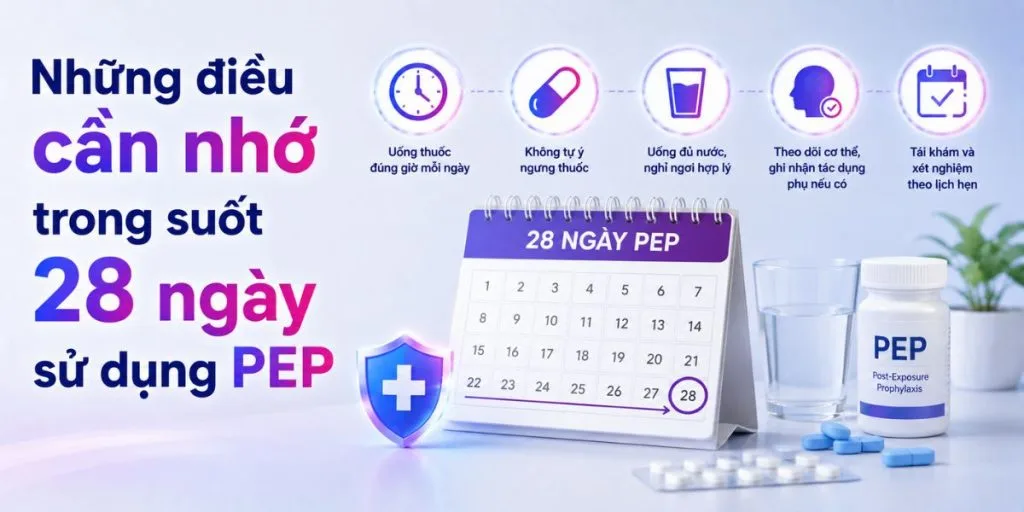
First, take PEP according to the prescribed regimen. Regular medication use is an important part of the prevention process. Next, do not stop the medication on your own when you feel healthy. If you experience side effects, discuss them with healthcare staff first.
In addition, remember that PEP focuses only on HIV. Therefore, you still need to be concerned about the risk of other STIs. In addition, keep track of your testing schedule after completing PEP. This helps you not miss the follow-up process. Finally, if HIV exposure occurs frequently, ask about PrEP. A long-term prevention strategy may be more suitable than using PEP multiple times.
How long should PEP be taken? Typically, the PEP regimen lasts 28 days. However, users need to follow the instructions provided by the healthcare facility. In addition, PEP needs to be started as soon as possible. The important marker often mentioned is within 72 hours after exposure.
Further reading
This article provides general information. For decisions about diagnosis, medicines or treatment, consult a qualified healthcare professional. Service availability and costs can change; confirm with the provider before booking. Our editorial approach
Published by Love2Test — Accessible sexual health information