Health
What Is HPV? Transmission, Symptoms and Health Risks
What is HPV? Learn how HPV is transmitted, symptoms of HPV infection, its level of danger, cancer risks, and testing methods.
Updated

On this page
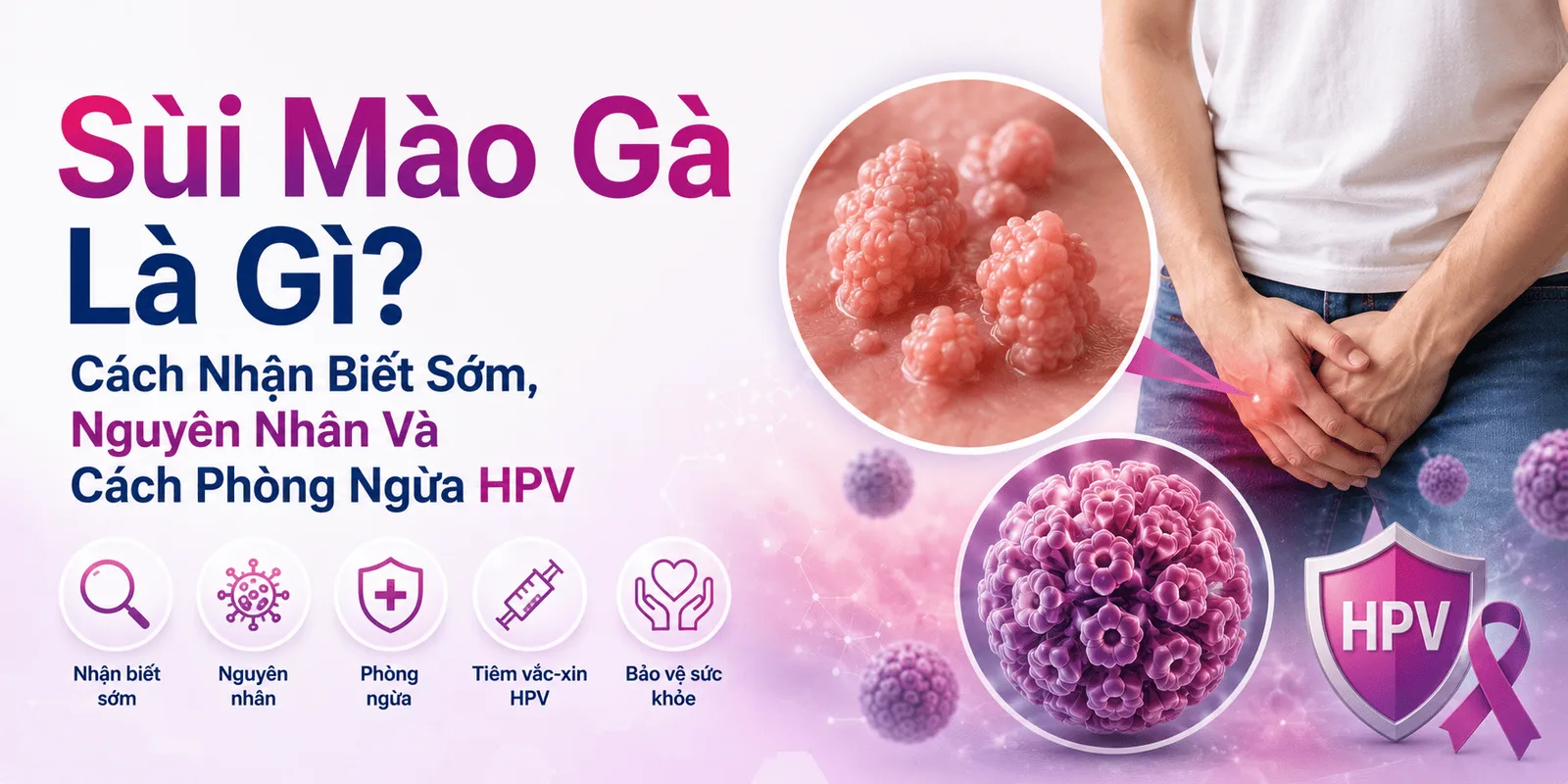
What is HPV is an important question when exploring sexual health, as HPV is one of the most common sexually transmitted viruses. HPV stands for Human Papillomavirus, a group of many different virus types that can affect the skin and mucous membranes. Some HPV types can cause genital warts, while high-risk types are associated with abnormal cell changes and certain cancers. An HPV infection does not necessarily mean that a person will develop cancer.
Most HPV infections can be controlled or naturally cleared by the immune system over time. However, if a high-risk HPV infection persists, the risk of developing precancerous changes and cancer may increase. Therefore, understanding HPV, its transmission routes, risk factors, vaccines, and screening methods is an important part of proactive health care.
What is HPV and how does Human Papillomavirus affect the body?
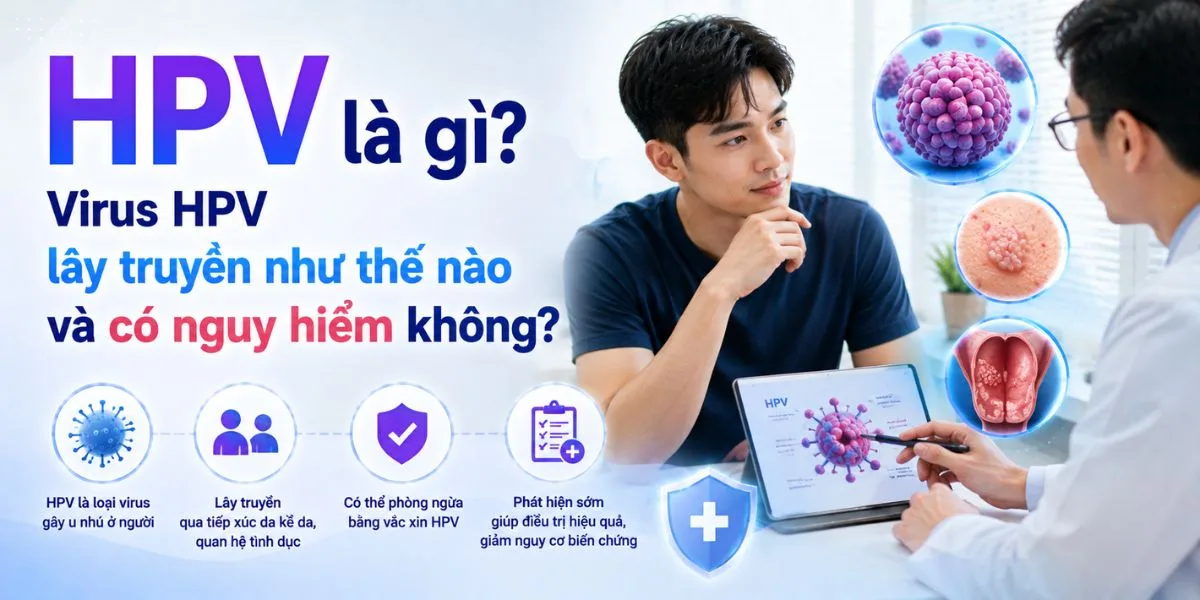
HPV, or Human Papillomavirus, is not a single virus but a group of many different types. The virus can enter epithelial cells in the skin and mucous membranes, including the genital, anal, and oral-pharyngeal areas. Some HPV types are considered low-risk because they are often associated with genital warts but have little connection to cancer. In contrast, high-risk HPV types can cause abnormal cell changes if the infection persists.

HPV 16 and HPV 18 are two high-risk types often mentioned because they are strongly associated with cervical cancer and other cancers. However, detecting HPV does not mean a person has cancer. Many infections are asymptomatic and can be controlled by the body, so testing and screening for the right population are important for detecting abnormal changes before they become severe.
How is HPV transmitted?
When exploring what is HPV, many people think HPV is only transmitted through penetrative sexual activity. In reality, the virus is mainly transmitted through direct contact between skin or mucous membranes in areas where the virus is present, especially during sexual activity. This means HPV can be transmitted even without full penetrative sexual activity. The virus can be transmitted through genital contact, vaginal, anal, and in some cases, oral-pharyngeal contact.
People who carry HPV often do not know they are infected because they may have no external symptoms. Therefore, the absence of warts or visible damage cannot be used to conclude that a person does not have HPV. Condoms can help reduce the risk but do not fully protect the genital area. This is also why HPV can spread widely in the community.
Transmission routes and risk factors for HPV infection
HPV can appear in anyone who has intimate contact with skin or mucous membranes carrying the virus. The risk is not entirely dependent on gender or sexual orientation. Understanding the situations that can transmit HPV helps individuals choose appropriate prevention methods rather than being overly anxious.
- Having vaginal sex with someone who carries HPV.
- Having anal sex.
- Direct skin-to-skin contact in the genital area.
- Intimate contact between genital areas even without penetration.
- Oral sex may be associated with HPV in the oral-pharyngeal area.
- Having multiple partners or new partners may increase the likelihood of exposure to HPV.
- Not receiving the HPV vaccine leaves the body without active protection against certain virus types the vaccine can prevent.
- Weakened immune systems may increase the likelihood of HPV persisting in the body.
- Smoking may be associated with a higher risk of certain HPV-related damage.
A person can be infected with HPV even with few partners. Since the virus is very common and often asymptomatic, accurately determining who or when a person was infected with HPV can be very difficult. A positive HPV result should not be used as evidence to conclude about a person's behavior or fidelity.
Is HPV dangerous and will an HPV infection always lead to cancer?
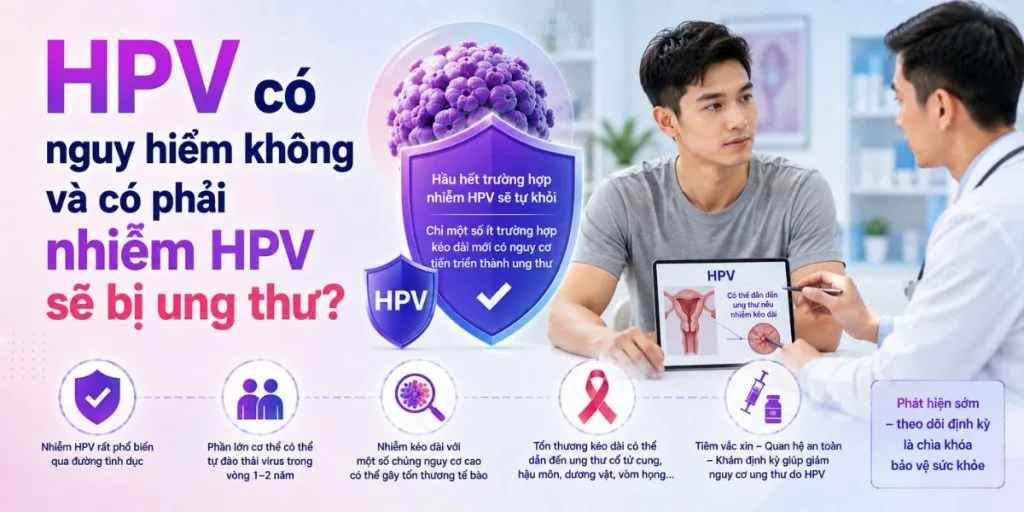
HPV can cause different health issues depending on the virus type, infection site, immune capability, and the time the virus remains in the body. Most HPV infections do not progress to cancer. The immune system often controls the virus over time, and infected individuals may not even know they had HPV. The concern is prolonged infection with certain high-risk HPV types. If the virus remains in the body for many years, it may promote abnormal cell changes, and a small percentage may progress to precancerous lesions or cancer if not detected and managed properly.
HPV is strongly associated with cervical cancer and also with some cancers of the anus, penis, vulva, vagina, and oral-pharyngeal areas. Therefore, the goal of prevention is not to create fear around HPV but to reduce risk through vaccination, appropriate screening, and monitoring abnormalities when necessary.
Distinguishing between low-risk and high-risk HPV
| Features | Low-risk HPV | High-risk HPV |
|---|---|---|
| Potential for infection | Yes | Yes |
| Can be asymptomatic | Yes | Yes |
| Associated with genital warts | More common | Not a typical symptom |
| Associated with cancer | Low risk | May be associated if infection persists |
| Commonly mentioned types | HPV 6, HPV 11 | HPV 16, HPV 18 and other types |
| Can be controlled by the immune system | Yes | Yes |
| Need for monitoring when abnormalities are detected | May be needed depending on the case | More important, depending on location and test results |
| Vaccine can prevent certain types | Yes | Yes |
| Detecting HPV means cancer | No | No |
| Can be transmitted without symptoms | Yes | Yes |
An important point when exploring what is HPV is not to equate all HPV types. Some mainly cause warts, while high-risk groups need attention due to their potential association with precancerous changes and cancer when infection persists.
What symptoms does HPV infection cause and why do many people not know they are infected?
A characteristic that makes HPV easy to transmit from one person to another is that most infected individuals do not have clear symptoms. A person may carry HPV but have completely normal skin and genital areas, with no pain, itching, or visible damage. With low-risk HPV types, recognizable symptoms may be genital warts appearing in the genital or anal area. In contrast, high-risk HPV infections often do not produce specific symptoms in the early stages.
Abnormal cell changes are usually detected through appropriate screening programs. Therefore, waiting for symptoms to appear before testing is not always a good strategy. Especially for those in the recommended cervical cancer screening groups or with specific risk factors, following medical guidelines for testing can help detect abnormalities earlier.
What health issues can be associated with HPV?
Not all HPV types cause the same diseases. The impact of the virus depends on the HPV type and infection site. Some health issues often mentioned when discussing HPV include:
- Genital warts: often associated with some low-risk HPV types and may appear in the genital or anal area.
- Cervical precancerous lesions: may appear when high-risk HPV infection persists and causes cell changes.
- Cervical cancer: is one of the most clearly associated diseases with prolonged high-risk HPV infection.
- Anal cancer: a significant proportion of cases are associated with HPV.
- Penile cancer: less common but some cases are associated with high-risk HPV.
- Vulvar and vaginal cancer: HPV is a factor in some cases.
- Oropharyngeal cancer: some HPV types, especially high-risk HPV, may be associated with cancer in the throat area.
It is important to note that these diseases do not occur immediately after HPV infection. The process from prolonged high-risk HPV infection to serious changes usually occurs over several stages. This time frame provides an opportunity for screening, monitoring, and treating precancerous lesions before they progress.
Is HPV in men a concern?
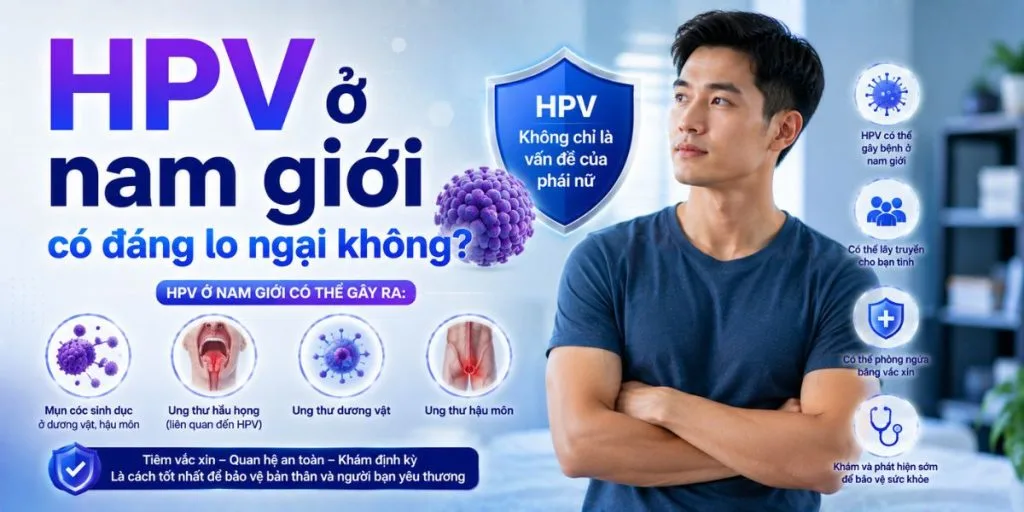
HPV is often discussed in the context of cervical cancer, so many people mistakenly think it is only a women's health issue. In reality, men can also be infected with and transmit HPV. The virus can affect the penis, scrotum, anal area, and oral-pharyngeal area depending on the contact site. Some types may cause genital warts, while high-risk HPV may be associated with some cases of anal, penile, and oropharyngeal cancer.
For men who have sex with men, understanding HPV is especially important because anal HPV may be an issue to assess based on personal risk. However, not everyone needs the same type of screening. The appropriate vaccination schedule and whether a detailed examination is needed should be determined based on age, medical history, immune status, and medical guidelines in the area of residence.
What does HPV testing and screening detect?
HPV testing is not a single test applied the same way to everyone. In cervical cancer screening, HPV testing may be used to find high-risk HPV types. Depending on age and guidelines in different countries, HPV testing may be performed alone or combined with cervical cell testing. An important goal is to identify those who need further monitoring and detect abnormal changes early before they progress to cancer.
For other areas of the body, screening methods and testing recommendations may differ and may not always have regular screening programs like cervical cancer. If there are warts, unusual damage, bleeding, or prolonged symptoms in the genital, anal, or oral-pharyngeal areas, it is advisable to visit a medical facility for evaluation rather than self-diagnosing HPV based on images on the Internet.
How does the HPV vaccine help prevent the virus?
The HPV vaccine is one of the most important tools to reduce the risk of HPV-related diseases. The vaccine works by helping the immune system recognize and develop protection against certain important HPV types before the body is exposed to the virus. Therefore, prevention effectiveness is usually highest when vaccinated before starting sexual activity. However, this does not mean that people who have had sexual activity definitely do not benefit from the vaccine. A person may have been exposed to one HPV type but not yet infected with other types the vaccine can prevent.
The appropriate age, number of doses, and vaccination schedule may vary depending on medical guidelines and individual health status. The vaccine does not treat existing HPV infections and does not completely replace cervical cancer screening. These two measures complement each other in the strategy for preventing HPV-related diseases.
How can the risk of HPV infection and transmission be reduced?
There is no method that completely eliminates all possibilities of HPV exposure in sexual life, but there are many ways to reduce the risk. The HPV vaccine is an important active prevention measure because it can protect against some common HPV types that cause disease. Correct use of condoms also helps reduce the risk, although they cannot cover all areas of the skin that may carry the virus. Reducing the number of partners or maintaining a relationship where both parties have clear information about their sexual health may reduce potential exposure, but it cannot guarantee complete protection from HPV.
Regular screening according to age and professional guidelines is especially important for cervical cancer prevention. In addition, avoiding smoking and maintaining overall health is beneficial because the immune system plays an important role in controlling HPV. If abnormal damage is detected, it should be evaluated by medical staff rather than self-treating with medication.
When should you see a doctor if you suspect HPV infection?
Because HPV often does not cause symptoms, not everyone infected will know to seek medical attention. However, if warts or unusual damage appear in the genital area, around the anus, or in areas that have had sexual contact, a medical examination can help determine the exact cause. Some damage may look like genital warts but may actually be related to other skin conditions, so it should not be diagnosed solely by eye or images from the Internet.
Individuals with a cervix should participate in cervical cancer screening programs according to their age and local guidelines, even if they have no symptoms. Those with weakened immune systems or specific risk factors may need a special monitoring plan. If an HPV positive result is obtained, the next step depends on the HPV type, cytology results, age, and medical history, not all cases require immediate treatment.
What is HPV? HPV, or Human Papillomavirus, is a common group of viruses primarily transmitted through direct skin and mucous membrane contact, especially during sexual activity. The virus has many different types. Some low-risk types are often associated with genital warts, while some high-risk types may be associated with precancerous changes and various cancers if the infection persists.
Further reading
This article provides general information. For decisions about diagnosis, medicines or treatment, consult a qualified healthcare professional. Service availability and costs can change; confirm with the provider before booking. Our editorial approach
Published by Love2Test — Accessible sexual health information