Health
HIV Testing Guide: Principles, Process and Preparation
Understand HIV testing, transmission risk assessment, common testing methods and preparation for a confidential health check.
Updated

On this page
Understanding HIV testing guide is the first and most important step to protect your health. Along with that, medical technology today has developed very strongly. HIV testing and treatment methods are increasingly advanced. The main goal is to reduce the number of patients. At the same time, medicine also strives to minimize the spread of the virus in the community.
Currently, science has not yet been able to completely cure HIV. However, this disease is no longer a "death sentence" as before. People infected with HIV can live healthily. They can still work and live normally. The important thing is to follow the antiretroviral (ARV) treatment regimen. In addition, actively checking your health regularly is very necessary.
Actively checking your health is the right of everyone. Not only people at high risk need to be tested. Anyone should know their own condition. From there, you will have the right direction for care and protection. HIV testing plays an important role like using condoms. It helps you avoid infecting your loved ones and the community.

The importance of HIV counseling and testing
Anyone can actively get an HIV test. You will also receive in-depth counseling from doctors. This helps you know your exact health status. As a result, each individual will have a more accurate understanding. This helps eliminate stigma and reduce risky behaviors.
Waiting for the results can cause anxiety. However, counseling from medical professionals brings many benefits:
- Psychological relief: You will receive accurate knowledge. You are advised thoroughly before testing. As a result, you will not be panicked by incorrect information.
- Family planning: Couples can have safer children. If the father or mother is infected with HIV, doctors will have prevention plans. This helps prevent the virus from spreading to the fetus.
- Protecting your partner: You will be more aware of protecting yourself. People infected with HIV who are treated well will not transmit the disease through sexual contact. This is the principle of K=K: Not detected = Not transmitted.
- Timely treatment: Early detection helps protect the immune system. CD4 cells will not be severely reduced. Patients do not need to wait until complications occur to start treatment.
Principles of analyzing HIV infection risk
Risk assessment is an important step before testing. You need to understand the mechanism of virus transmission. Doctors usually use the following 4 factors to analyze the risk:
Virus exit
The HIV virus must exit the body of the infected person. It does not spread through sweat or tears. The virus only spreads through specific bodily fluids. These are blood, semen, vaginal secretions, or breast milk.
Survival
The virus must survive in the contact environment. In reality, the HIV virus is very weak when it is outside the body. It is easily killed by high temperatures. Sunlight or cleaning agents can also kill the virus.
Sufficient quantity
The amount of virus must be large enough to cause disease. A high viral load in the blood increases the risk of infection. Conversely, if the patient is undergoing good ARV treatment, the risk will be very low. The viral load at this time is not enough to spread the disease.
Entry
HIV testing guide The virus must enter the recipient's bloodstream. HIV cannot penetrate intact skin. It enters through thin mucous membranes or open wounds. Sharing needles also directly introduces the virus into the blood.
International principles for protecting rights (5C Principle)
HIV testing guide is protected by international standards. Medical facilities must strictly adhere to the 5C Principle:
Voluntary consent
You must be completely voluntary when testing. No one is allowed to force you. You can agree in writing or verbally.
Confidentiality
Your personal information is kept absolutely confidential. Medical records and results will not be disclosed. Medical facilities will not inform your family or employer without your permission.
Professional counseling
You will be advised by a professional team. The counseling process takes place both before and after testing. Doctors will explain the results and guide you on the next steps.
Correct test result
Medical facilities must use standard equipment. The testing process must be strictly tested. This ensures the most accurate results.
Connection to care
If the result is positive, you will be supported immediately. The healthcare system will connect you with care services. You will be treated with ARV drugs as soon as possible.
Understanding the "Window Period"
You need to understand the "window period." This is when the virus has entered the body but cannot be detected. The tests do not find antigens or antibodies.
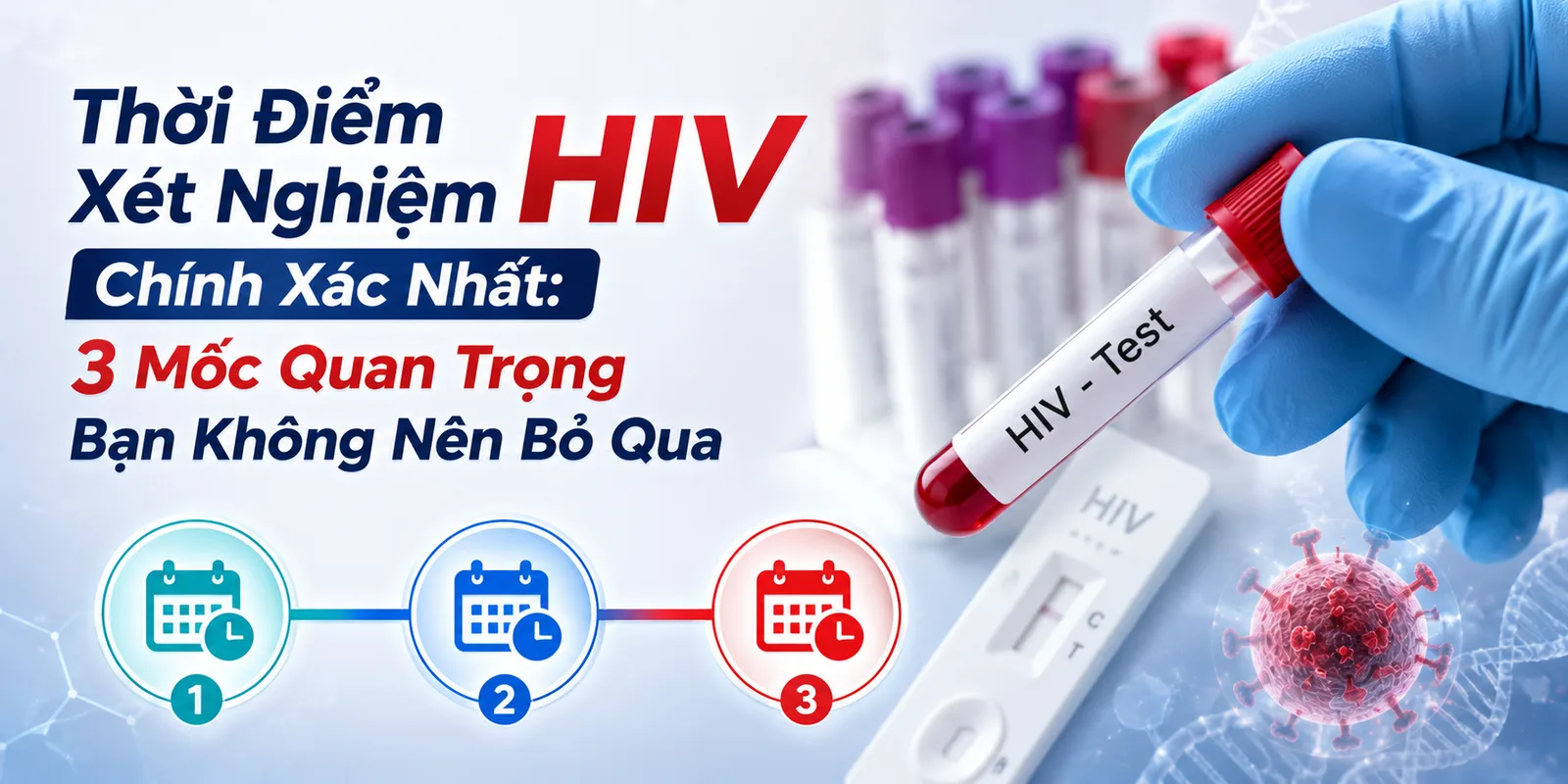
This time depends on the testing method. It can last from 2 weeks to 3 months. During this time, the result may be False negative. However, the patient can still transmit the disease to others. Therefore, you need to be tested again after 3 months. This helps confirm your health status with certainty.
Common misconceptions about HIV
Many people still have fears due to misunderstandings. Here are the facts you need to know:
- Who needs testing? Anyone with unsafe sexual relations needs to be checked. Accidental exposure to foreign blood is also a risk.
- Does normal contact spread it? No. HIV does not spread through kissing or handshaking. Sharing plates or utensils or using the restroom is safe. Mosquito bites also do not spread HIV.
- Afraid of information being exposed? The testing process is always confidential. You will not be fired for being infected with HIV. The law protects your rights.
- Wait for symptoms before checking? No. HIV incubates for a long time without symptoms. When the disease manifests, the immune system has already weakened. Treatment at this stage will be more difficult.
Note: This article is for reference only. Please visit a medical facility for direct consultation. Doctors will help you test and protect your health best.
Further reading
This article provides general information. For decisions about diagnosis, medicines or treatment, consult a qualified healthcare professional. Service availability and costs can change; confirm with the provider before booking. Our editorial approach
Published by Love2Test — Accessible sexual health information